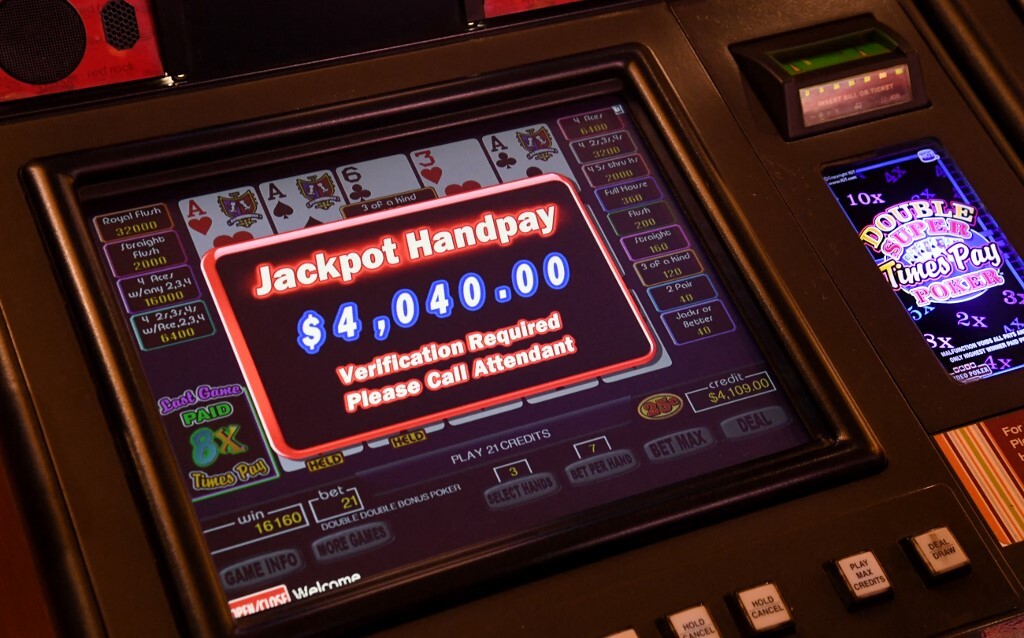
Because of President Trump’s One Big Beautiful Bill Act, the tax threshold on slot jackpots will increase after decades of stagnation, much to the delight of slot players and gaming state legislators.
Moving On Up
Increasing the tax threshold for jackpot winners from $1200 to $2000 is a baby step taken by a middle-aged bill.
Internal Revenue Code sections 6041 and 6041A were established in 1977 with a mandatory reporting threshold of $1200 or more. Casinos could not legally pay a customer until Form W-2G was issued to slot players, along with an ID presented to verify the winner.
Many slot players and the legislators representing gaming states have pined for a much higher tax threshold; after all, $1200 in 1977 is much different from what it is today. Even gaming tribes have been advocating for a significantly higher tax threshold.
Sam Cohen, government affairs and legal officer for the Santa Ynez Band of Chumash Indians, has argued for an increased tax rate, stating, “Failure to index this reporting threshold has placed an unnecessary compliance burden on the player who’s the taxpayer, increased administrative costs for tribal and commercial casinos, and created paperwork backlogs and operational burdens for the IRS.
“When accounting for inflation, a comparable jackpot reporting threshold today is estimated to be approximately $5,800,” he said. “The IRSAC recommends raising the reporting threshold and subsequently increasing it based on inflation and cost-of-living adjustments each year.”
The increase to $2000 or more on slot jackpots will begin on January 1, 2026, but any jackpots hit before then will not be retroactive and must be paid in accordance with the $1200 or more tax stipulation.
Titus Scrambling to Undo Reduced Gambling Loss Percentage
The tax reporting jackpot threshold will increase to $2000 next year, which will cut down on paperwork for the casino and keep players pressing the buttons without their machines being automatically locked.
Attendants will also spend less time searching for the winning machines and handing out the proper IRS forms, while slot players will be encouraged by the new rule.
Although the One Big Beautiful Bill Act helped bettors on one hand, it hurt the industry on the other. President Trump’s budget has also decreased the 100% tax write-off on gambling losses to 90%, which may encourage gamblers to eschew US casinos and mobile sportsbooks for offshore avenues that are impervious to US tax laws.
Nevada Representative Dina Titus has been relentless in her efforts to restore the 100% write-off, writing on X recently, “Today I am urging @WaysMeansCmte Chairman @RepJasonSmith to place the FAIR BET Act on the committee calendar. Now is the time to fix the unfair 90% tax deduction for gambling losses that negatively impacts professional and casual players. See my full letter to the Chairman below.”
The topic was broached with President Trump aboard Air Force One, and he responded as follows: “We have no tax on tips, we have no tax on Social Security, and we have no tax on overtime. No tax on gambling winnings? I don’t know. I’m gonna have to think about that.”