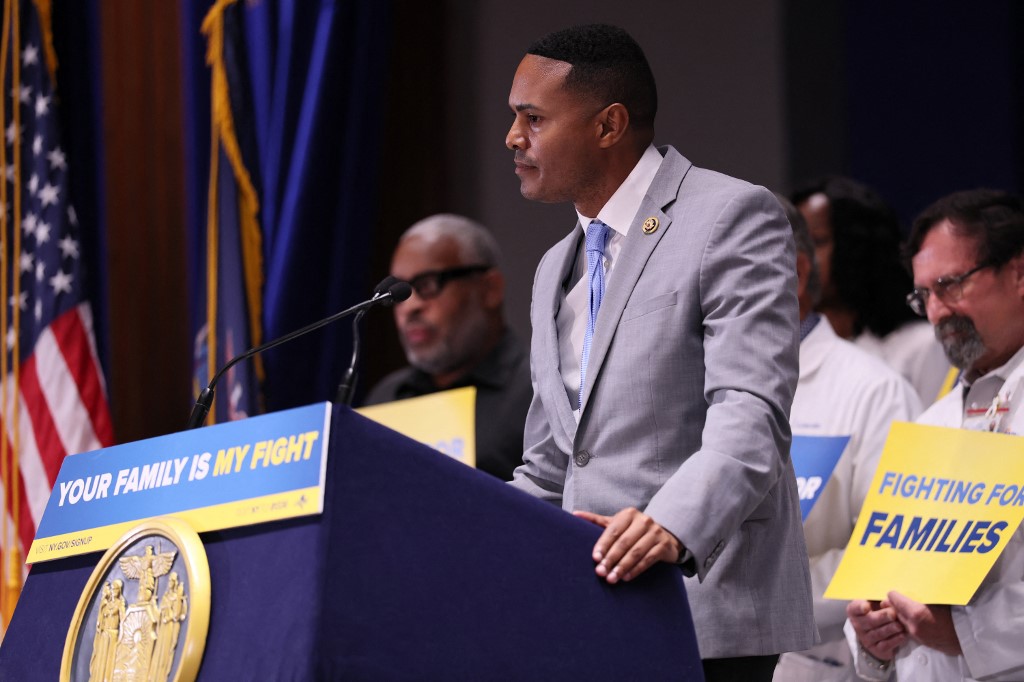
Ritchie Torres, a congressman from New York, has advanced a bill that would make it illegal for federally elected officials, political appointees, and Executive Branch employees to trade on prediction markets if they knowingly have nonpublic information about the transaction or could procure that information through their official duties.
Transparency Legislation
New York Representative Ritchie Torres is sponsoring the “Public Integrity in Financial Prediction Markets Act of 2026,” which would criminalize insider trading by political officials with access to non-public information that could be used to generate profits through prediction markets.
The bill would ban politicians and their operatives from using inside knowledge for financial gain by using prediction market platforms as a vessel to effectuate that end. The bill won the support of Kalshi CEO Tarek Mansour, who believes consumers using his platform and those of his competitors, like Polymarket and Crypto.com, to name a few of the most popular, should not be able to have a leg up on the geopolitical market simply because they have access to confidential information.
Just as insider trading is banned on the stock market, Torres’ bill aims “to affirm the ban on insider trading on prediction markets.” Mansour has stated that his company’s position fully supports the bill.
Kalshi’s Support Explained
When asked about why Kalshi backs the measure, Mansour responded, “Why? Because we already implement it. However, it’s important to emphasize that this American bill only applies to regulated, American companies and not to unregulated, non-American companies, which is where the alleged issues are occurring.”
However, Mansour added that many of the scandals originate from outside the US, stating, “In prediction markets, recent alleged cases of insider trading are about unregulated, offshore platforms. Criticizing Nasdaq for something a foreign FX broker does is meaningless: if anything, it helps the foreign player.”
“If you have material non-public information on a market, you cannot trade it, and if you do, you are committing a financial crime. This applies to government employees, policymakers, executives, or anyone who holds information that is legally not meant to be public,” the Kalshi CEO added.
Maduro Prediction
Torres’ bill is gaining traction in light of the recent prediction market transaction that saw one anonymous user buy a $30,000 contract through Polymarket, betting that Venezuelan President Nicolás Maduro would be ousted from power by January 31, 2026.
As if that wasn’t concerning enough, the account was opened just a few days before the raid that saw Maduro extracted from his Caracas location by an elite Tier 1 special forces unit, Delta Force, and brought to justice in the United States.
Moreover, this account shows thousands of dollars in trading on this contract on the night of the raid, which netted the user a $400,000 profit. The timing of the purchases was seemingly too coincidental for anyone without access to high-level intelligence.
Polymarket has declined to comment, but the use of insider information, which is illegal to use on US stock markets and stringently monitored by the feds, has been neglected on the increasingly popular prediction trading platforms.
Tribal Gaming Nations Push Back
Tribal gaming nations have opposed prediction markets due to their relatively recent focus on sports betting contracts. Indian Gaming Association Chairman David Bean highlighted the Maduro contract as just one example of “how out of control” prediction markets have become.
During a recent webcast, Bean declared, “We have to make sure this is on our plate, that this is our main course, or main focus, for the immediate future and beyond. Because there’s always a threat (to Indian gaming), and this is probably the largest threat in the last 10 years, the last decade. So, we have to take it seriously.”