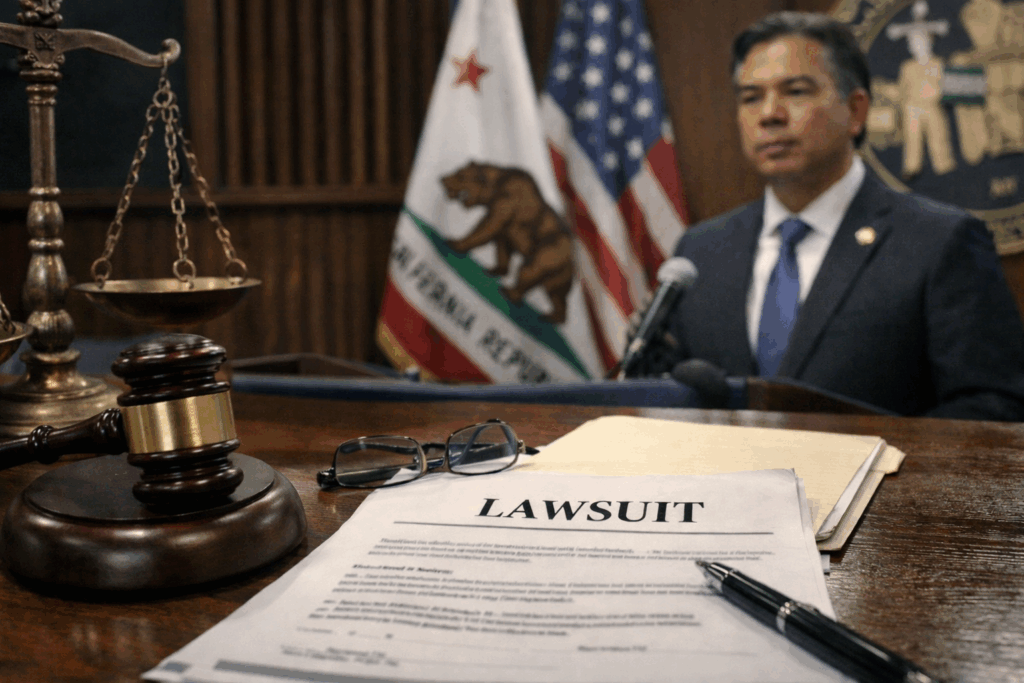
The legal battle over daily fantasy sports (DFS) in California intensified after Underdog Fantasy filed a lawsuit seeking to block a formal legal opinion issued by Attorney General Rob Bonta. The opinion concludes that DFS contests are illegal for players physically located in California, a finding Underdog argues exceeds the attorney general’s authority and exposes DFS operators to immediate and significant business harm.
Underdog Sues to Block California DA’s Opinion on DFS Legality
The lawsuit represents one of the most direct challenges yet to California’s shifting posture on DFS regulation. While the state has not passed legislation explicitly banning fantasy sports, the opinion has already altered the risk landscape for operators, processors, and partners operating in the nation’s largest market.
Timeline (request → TRO → opinion release)
Below is a simplified timeline outlining how the dispute unfolded, from the initial legislative request to Underdog’s court challenge:
July 2023: California lawmakers formally request a legal opinion from the attorney general on whether daily fantasy sports are legal under existing state law.
November 2023: Underdog files an emergency action in Sacramento Superior Court seeking a temporary restraining order (TRO) to prevent the opinion’s release, citing imminent harm to its business operations.
December 2023: The court declines to block the opinion, allowing the attorney general to proceed with publication.
Underdog’s lawsuit does not ask the court to declare Daily Fantasy Sports (DFS) legal in California. Instead, it challenges whether the attorney general had the authority to issue the opinion in the first place.
Under California law, attorney general opinions are intended to answer questions of law that directly relate to the official duties of the requesting legislator or agency. Underdog argues the DFS question does not meet that standard, asserting it amounts to a broad policy determination rather than a narrow legal clarification.
The company also contends that the opinion goes beyond interpreting existing statutes and effectively creates new legal consequences without legislative approval or judicial review. From Underdog’s perspective, that transforms an advisory opinion into a de facto regulatory action—something the opinion process was never designed to accomplish.
The attorney general’s office countered that it is legally obligated to respond to lawmakers’ requests for legal guidance and that the DFS inquiry squarely fell within that responsibility. While the court allowed the opinion to be released, it did not rule on the broader question of whether the attorney general exceeded that authority.
How this fits into California’s broader DFS enforcement push
Underdog’s legal challenge comes as California signals a tougher stance toward DFS operators overall. The attorney general’s opinion concluded that both draft-style contests and pick’em products constitute illegal wagering when offered to players physically located in the state.
That conclusion has fueled concerns about enforcement, including potential cease-and-desist actions or civil penalties. Bookmakers Review has examined this shift in detail in its coverage of how the California attorney general is moving against DFS operators.
The dispute also intersects with longstanding opposition from tribal gaming interests, who argue DFS products closely resemble unregulated sports betting. Those efforts are detailed in reporting on how California tribes are aiming at DFS and pick’em contests, which helped set the stage for the current legal climate.
Practical impacts if operators pull back in CA
If DFS operators scale back or exit California due to legal uncertainty, the effects could extend well beyond the platforms themselves.
From an operational standpoint, banking and payment processing relationships are often the first pressure points. Financial institutions tend to react quickly to regulatory risk, which could disrupt deposits, withdrawals, or account funding for California-based users.
Players could also experience sudden changes in access, including geolocation blocks, reduced contest offerings, or full platform withdrawals from the state. Marketing partnerships—particularly those involving California sports teams, media outlets, or affiliates—may be paused or terminated to reduce exposure.
Given California’s size and influence, any sustained pullback could reshape the national DFS market. The situation also renews questions about whether lawmakers will eventually step in to provide clarity, a topic explored further in Bookmakers Review’s background analysis on whether California will outlaw fantasy sports.
For ongoing state-specific updates, including DFS and pick’em availability, readers can follow developments in the California DFS and pick’em hub as the legal challenge surrounding Underdog’s lawsuit continues to unfold.