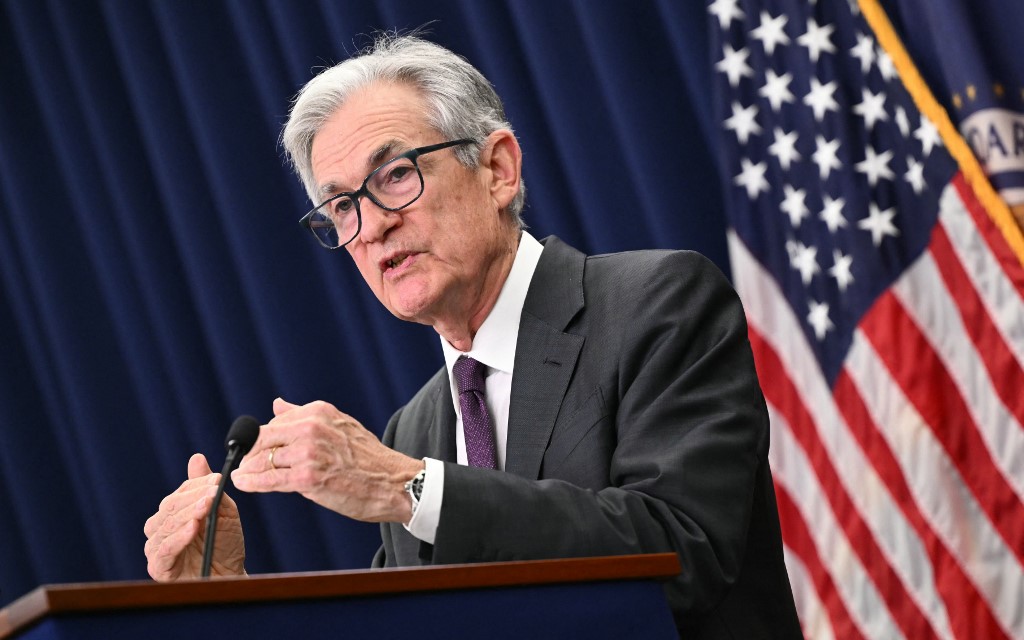
Just when markets think they’ve decoded the Federal Reserve, Jerome Powell finds a way to rewrite the exam.
That dynamic was already on full display in late summer 2025, when the Fed chair spoke at the annual Jackson Hole economic symposium and described a U.S. economy showing “resilience” amid continued political and structural uncertainty. At the time, Powell’s language was carefully calibrated — but traders didn’t need much encouragement.
Within hours, crypto markets reacted as if a door had been quietly unlocked. Bitcoin surged, continuing a rally that had already been fueled by expectations of easier monetary policy, strong institutional demand, and growing skepticism about the long-term purchasing power of the U.S. dollar.
For bettors and investors who leaned bullish on Bitcoin into the end of 2025, the move validated what had been building for months: once the conversation around rate cuts became credible, risk assets were going to respond — and crypto more than most.
Did the Fed Actually Blink?
By early 2026, the answer is nuanced.
The Federal Reserve did not suddenly abandon its inflation mandate, nor did Powell “cave” to political pressure. Instead, the Fed followed a familiar pattern: patience, signaling, and gradual recalibration. Markets that had spent most of 2025 oscillating between “higher for longer” and “cuts are coming” eventually settled into a middle ground.
Prediction markets like Polymarket captured this shift in real time. Contracts tied to Federal Open Market Committee (FOMC) decisions consistently showed a strong bias toward modest rate cuts rather than aggressive easing — a reflection of both cooling inflation and persistent uncertainty around labor participation, trade policy, and global growth.
That restraint mattered. It allowed Powell to maintain institutional credibility while still giving markets what they wanted most: clarity.
Why Bitcoin Benefited Anyway
Bitcoin didn’t need dramatic cuts to thrive — it just needed the ceiling removed.
Once it became clear that the Fed was unlikely to resume tightening, capital rotation began in earnest. High real yields had kept money parked in bonds and cash equivalents for much of 2024 and early 2025. As those yields stabilized and then drifted lower, investors started reaching again — first into equities, then into higher-beta assets like crypto.
Lower rates also meant cheaper leverage, more liquidity, and renewed appetite for speculative exposure. At the same time, ongoing concerns about fiscal deficits, currency debasement, and geopolitical fragmentation kept Bitcoin firmly in the conversation as a hedge — not just a gamble.
In that environment, it wasn’t surprising to see betting markets and financial odds boards steadily move their Bitcoin price totals higher as 2025 wore on. Even skeptics had to acknowledge that the macro backdrop was no longer hostile.
The Bigger Picture in 2026
As we enter 2026, the lesson from last year is straightforward: Bitcoin no longer needs perfect conditions to rally — it just needs the absence of active headwinds.
That doesn’t mean prices only go up. Volatility remains the price of admission, and unexpected shocks — economic, political, or regulatory — can still derail even the strongest trends. But the combination of a more flexible Fed, structurally lower labor supply, and persistent global demand for alternative stores of value has shifted the baseline.
For bettors tracking Bitcoin odds and investors weighing risk exposure, the needle hasn’t snapped back to “easy money.” But it’s no longer stuck at “policy chokehold” either.
In early 2026, that distinction matters.
Bet — and invest — accordingly.