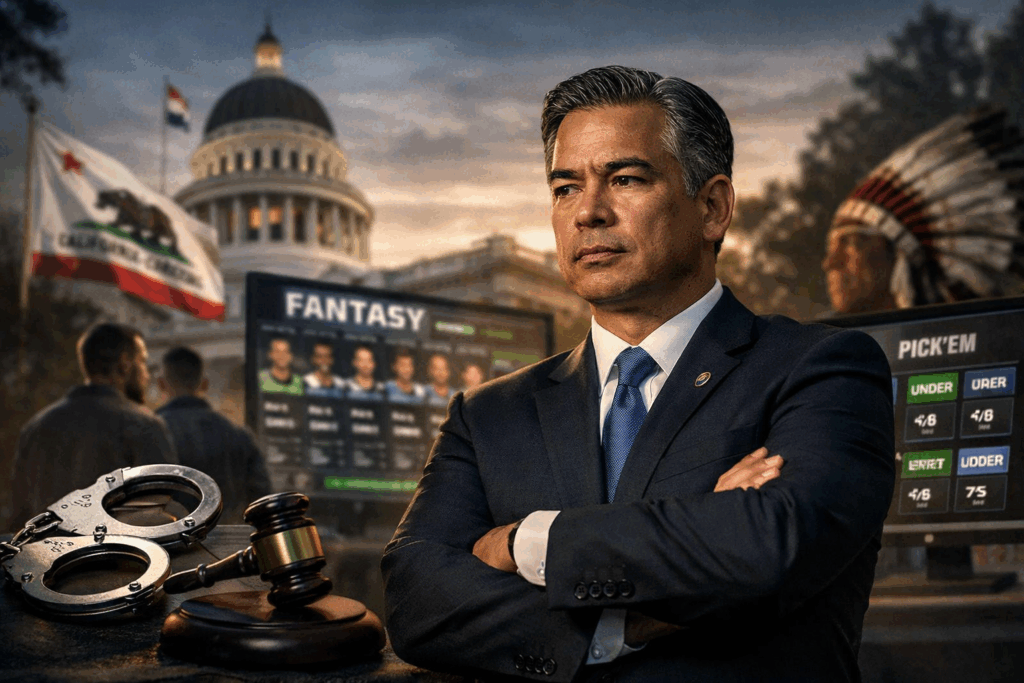
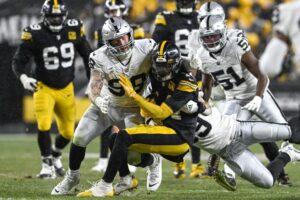
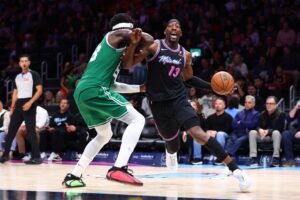
The long-standing ambiguity around daily fantasy sports (DFS) in California may finally be giving way to enforcement pressure. A formal legal opinion issued by Attorney General Rob Bonta concludes that DFS contests are illegal for players physically located in California—and recent signals from the Department of Justice suggest that opinion may not remain theoretical for long.
California AG Aims to Enforce Against DFS Operators
For years, DFS operators have relied on the absence of direct enforcement to continue offering contests in the state. But with tribal governments pushing for action, lawsuits challenging DFS legality already underway, and the DOJ outlining a clear interpretation of state law, the industry is facing its most serious regulatory moment yet in the nation’s largest market.
What did the CA DOJ opinion actually conclude?
The California Department of Justice released a formal legal opinion stating that daily fantasy sports contests violate California gambling law when offered to players physically present in the state. The opinion, authored under Attorney General Rob Bonta, concludes that DFS contests meet the legal definition of wagering under California Penal Code §337a.
According to the DOJ, DFS requires players to pay consideration for the chance to win prizes based on the outcomes of real-world sporting events—elements that together constitute illegal betting under state law. Crucially, the opinion rejects the argument that DFS qualifies as a permissible game of skill exemption in California.
The DOJ emphasized that legality hinges on player location, not where the operator is based. That means DFS platforms operating nationally may still be violating California law if they accept entries from users located within state borders. While the opinion does not create new law, it serves as authoritative guidance for prosecutors and regulators statewide.
Pick’em vs draft contests: why both are in the crosshairs
A key takeaway from the opinion is that both traditional draft-style DFS contests and newer pick’em formats are treated as illegal under California law. Draft contests involve assembling fantasy lineups under a salary cap, while pick’em games ask players to predict whether individual athletes will exceed or fall short of statistical benchmarks.
The DOJ found no meaningful legal distinction between the two formats. In both cases, players pay to participate, outcomes depend on future sporting events, and prizes are awarded based on performance. That structure, the opinion argues, mirrors wagering rather than lawful fantasy competition.
This conclusion is especially significant for pick’em operators, many of whom expanded aggressively in California under the assumption that pick’em products carried less regulatory risk. That assumption has been directly challenged, echoing arguments long raised by tribal governments. Those concerns are explored further in coverage of how California tribes are taking aim at DFS pick’em contests.
What “enforcement” could look like (and what it doesn’t mean)
Despite alarmist headlines, the DOJ opinion does not automatically ban DFS or initiate prosecutions. Attorney General opinions are advisory, not binding law, and do not themselves authorize penalties. However, they do shape how state agencies interpret existing statutes and can serve as a foundation for enforcement actions.
Possible enforcement steps could include cease-and-desist letters, civil lawsuits, or coordination with local prosecutors if DFS operators continue serving California-based players. That said, enforcement timelines and scope remain unclear, and political considerations may slow immediate action.
Notably, Governor Gavin Newsom’s office publicly stated it did not agree with the DOJ’s conclusion, underscoring internal disagreement within state leadership. That divide suggests that legislative clarification or judicial rulings may ultimately determine DFS’s fate, rather than enforcement alone.
What this means for DFS operators and players
For DFS operators, the opinion significantly raises legal and business risk. Some companies may choose to preemptively restrict access for California users, while others are expected to fight back through the courts. One major challenge is already unfolding in the Underdog lawsuit over DFS legality in California, which could set a precedent for the entire industry.
For players, the impact is more nuanced. DFS contests remain available for now, but the opinion reinforces that participation while physically located in California may violate state law under the DOJ’s interpretation. Players should expect increased uncertainty as enforcement discussions continue.
For broader context on how California reached this point, including past legislative efforts and regulatory debates, see Bookmakers Review’s analysis on whether California will outlaw fantasy sports. Ongoing state-specific updates, including DFS and pick’em availability, are tracked in the California DFS and pick’em hub.