
2026 NHL Stanley Cup Playoffs Betting Trends Report
Through games played up to April 28, the 2026 NHL Stanley Cup Playoffs have delivered one of the most balanced betting landscapes in recent memory. Bettors expecting a clear edge, whether backing favorites, riding home ice, or chasing totals, have instead encountered a tightly contested environment.
Moneyline results are relatively even, with favorites having a 21-15 lead. However, most of those wins are from heavy favorites, such as the Avalanche over the Kings and the Hurricanes over the Senators.
This parity underscores a key theme for bettors: the absence of a dominant macro trend means success will hinge on identifying subtler edges. Rather than relying on broad assumptions, bettors must dig into situational angles and the evolving series narrative.
With that said, it’s also important to acknowledge that we’re dealing with a small sample size here.
To that end, in this report, we break down the most important betting trends from Round 1 and outline how to apply them moving forward. NBA betting trends are also available. All stats and trends are based on data from the top-rated offshore sportsbooks.
Macro Snapshot of Stanley Cup Playoffs Trends
After 36 first-round games, here’s how the Stanley Cup Playoffs trends look:
- Favorites vs. Underdogs: Favorites lead: 21-15
- Home vs. Away Teams: Road teams slightly ahead: 19-17
- Over/Under Totals: Over slightly ahead: 19-17
While favorites have a lead, most of that is from the two series sweeps.
Overall, favorites have not provided the consistent returns many bettors expect in playoff hockey. This isn’t a case of outright underdog dominance, but rather a failure of chalk to separate itself. It highlights how you should avoid laying juice unless you’re confident there’s an edge.
Second, road teams holding a slight edge highlights the lack of home ice advantage so far. Don’t be afraid to take an underdog on the road, especially since you’re getting a better price.
As for Over/Unders, no trends have emerged as of now. What I like to do is check each team’s expected goals throughout the series. If the number is high but the actual goals are low, it’s a good time for an over.
Series Snapshot: Where Things Stand
Eastern Conference
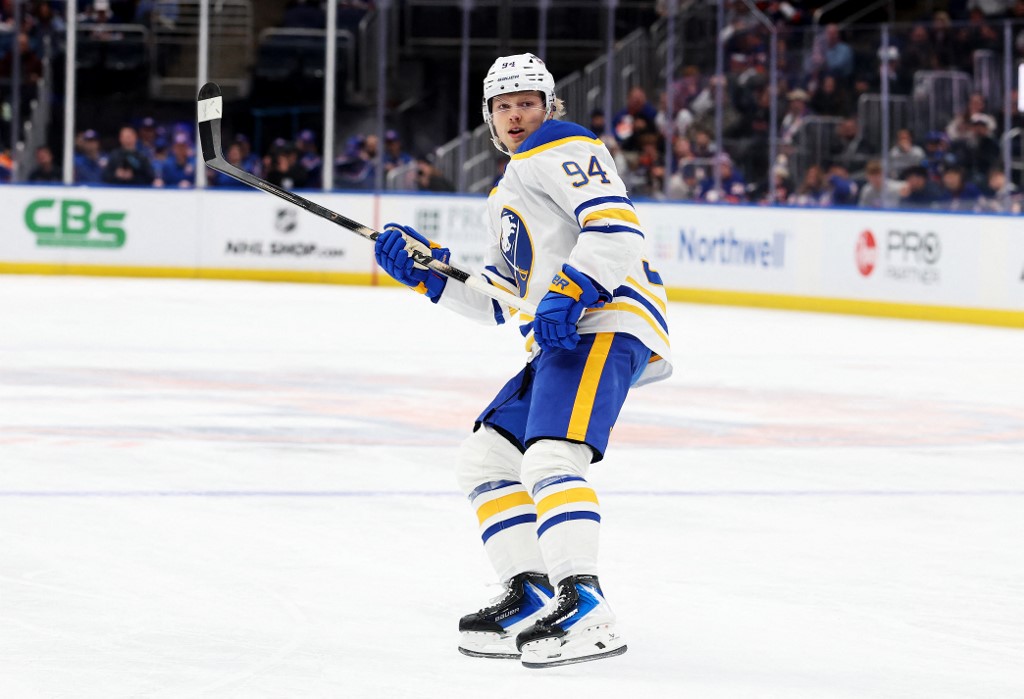
- Buffalo Sabres vs. Boston Bruins (Sabres lead 3-2):
Buffalo looked dominant early, including a 6-1 Game 4 win, but Boston’s Game 5 overtime victory has extended the series. Despite the setback, Buffalo remains a heavy favorite in this series. - Tampa Bay Lightning vs. Montreal Canadiens (Tied 2-2):
An overtime-heavy series (three of four games), highlighting how thin the margin is between these teams. Goaltending has played a major role. It’s been an “Under” type of series. - Carolina Hurricanes vs. Ottawa Senators (Hurricanes win 4-0):
The Hurricanes were able to get it done in a few close games. The Senators deserved better than this, but alas, that’s hockey. - Philadelphia Flyers vs. Pittsburgh Penguins (Flyers lead 3-2):
A dramatic shift in momentum. Philadelphia jumped out to a 3-0 lead, but Pittsburgh has clawed back with two straight wins, making this an intriguing series.
Western Conference
- Colorado Avalanche vs. Los Angeles Kings (Colorado wins 4-0):
The Avalanche have looked every bit the Stanley Cup favorite with a decisive sweep and strong puck-line performances. - Dallas Stars vs. Minnesota Wild (Wild lead 3-2):
Minnesota’s Game 5 road win flipped the series. Don’t lay juice on this series, as both teams have proven capable of winning on the road. It wouldn’t surprise me to see the Stars force Game 7. - Vegas Golden Knights vs. Utah Mammoth (Tied 2-2):
The Golden Knights got a huge win in Game 4 to even up the series. They’ve been the better team so far. It feels like they’re going to assert their dominance from here on out. - Anaheim vs. Edmonton (Ducks lead 3-2): A high-scoring series where Anaheim has thrived as an underdog. Edmonton’s goaltending struggles have been a decisive factor. But the Oilers just dominated the Ducks in Game 4. I’d bet on a comeback for Edmonton.
Puck Line (ATS) Performance
So far in the playoffs, favorites are 10-26 on the puck line (-1.5), so +1.5 is hitting at a 72.2% rate, which is -260 in odds. This trend highlights how laying juice on +1.5 makes sense during the playoffs, as long as it’s not too expensive.
It’s also worth noting that +1.5 underdogs have won outright in 13 of those 26 wins, so sometimes it’s better to just take the +1.5 without the moneyline.
In series that have been close, like Lightning vs Canadiens, +1.5 looks like a strong bet. For Game 5, you can get the Canadiens +1.5 at -175, which is still a value considering how this series has gone so far.
Home Underdogs
Home underdogs have struggled so far, with a 4-7 record overall. However, that’s a bit skewed by the Kings and the Senators, two teams that were unable to get a win on home ice.
In closer series, like the Lightning vs. the Canadiens, the Oilers vs Ducks, or the Golden Knights vs Mammoth, home underdogs have performed well.
There’s not much of a macro trend here. The main takeaway is to look closely at each series. If they’ve been close, taking a home underdog makes a lot of sense.
Moneyline Public vs. Sharp Splits
Round 1 has also delivered several textbook examples of public vs. sharp betting dynamics.
Key Examples:
- Oilers at Ducks (Game 3): Edmonton attracted 73% of bets and 84% of handle as a road favorite. The result? A 7-4 Anaheim win, which was a classic public fade.
- Golden Knights at Mammoth (Game 4): Public leaned toward Vegas, but Utah still had strong support in puck-line and total markets. Vegas won, but only in double OT, barely justifying the favorite price.
- Golden Knights -1.5 (Game 3): Sharp money backed Vegas heavily on the puck line, but Utah won outright. Even sharp bettors aren’t immune to variance in this environment.
- Penguins comeback: After falling behind 0-3, the Penguins were priced at +1000. Sharp bettors buying low have been rewarded with two straight wins.
- Game 5 underdog wins: Boston and Minnesota both cashed as moderate underdogs, showing how road teams can still get it done for you.
Over / Under Trends
Totals have been balanced overall, but series-specific patterns offer valuable insight:
- Lightning vs. Canadiens: Three straight unders after Game 1. Elite goaltending has taken control.
- Ducks vs. Oilers: The highest-scoring series, with multiple overs and rising totals.
- Penguins vs. Flyers: Mostly under, reflecting strong goaltending on both sides.
The main takeaway here: Ducks vs Oilers unders. The total has moved up from 6.5 to 7.5. That’s too high a number. We saw that in Game 5, where the Oilers won 4-1, comfortably staying below the mark.
Four Most Actionable Takeaways
1. Fade Market Adjustments
When the market adjusts, we pivot. A perfect example of this is with the Ducks vs. the Oilers. What started as 6.5-goal totals is now 7.5. That’s simply too high, so we move from Over to Under.
2. Home Underdogs at Short Prices
Large home underdogs haven’t gotten it done. Just look at the Kings against the Avalanche. If you’re going to take one, it’s usually a +115 type of team that actually wins.
3. Home Ice Advantage Isn’t a Huge Factor
Don’t be afraid of taking a road underdog, as home ice advantage hasn’t been that big of a deal.
4. Underdog Puck Lines Have Crushed
Underdog puck lines (+1.5) have been great bets, as we’ve seen a lot of one-goal games. If you like a team to win, consider laying the juice on the puck line.
Responsible Gaming
While trends can provide an edge, it’s essential to approach betting responsibly.
- Manage your bankroll: Only wager what you can afford to lose.
- Avoid chasing losses: Emotional betting often leads to poor decisions.
- Stay disciplined: Stick to a strategy rather than reacting impulsively to results.
- Recognize variance: A 36-game sample is still relatively small, and outcomes can shift quickly.
The NHL playoffs are particularly dynamic, with markets adjusting rapidly to injuries, goaltending changes, and momentum swings. Staying informed and disciplined is key to long-term success.
Final Thoughts
The 2026 Stanley Cup Playoffs have delivered a rare blend of parity and unpredictability. With favorites failing to dominate, home ice proving less impactful, and underdogs thriving, bettors are forced to rethink traditional approaches.
Rather than relying on broad assumptions, the edge lies in identifying specific situations. As Round 2 approaches, these insights will become even more valuable, especially as the market begins to adjust.