2026 Preakness Stakes Horse Profiles: Odds, Jockeys, Trainers & Betting Angles for All 14 Runners

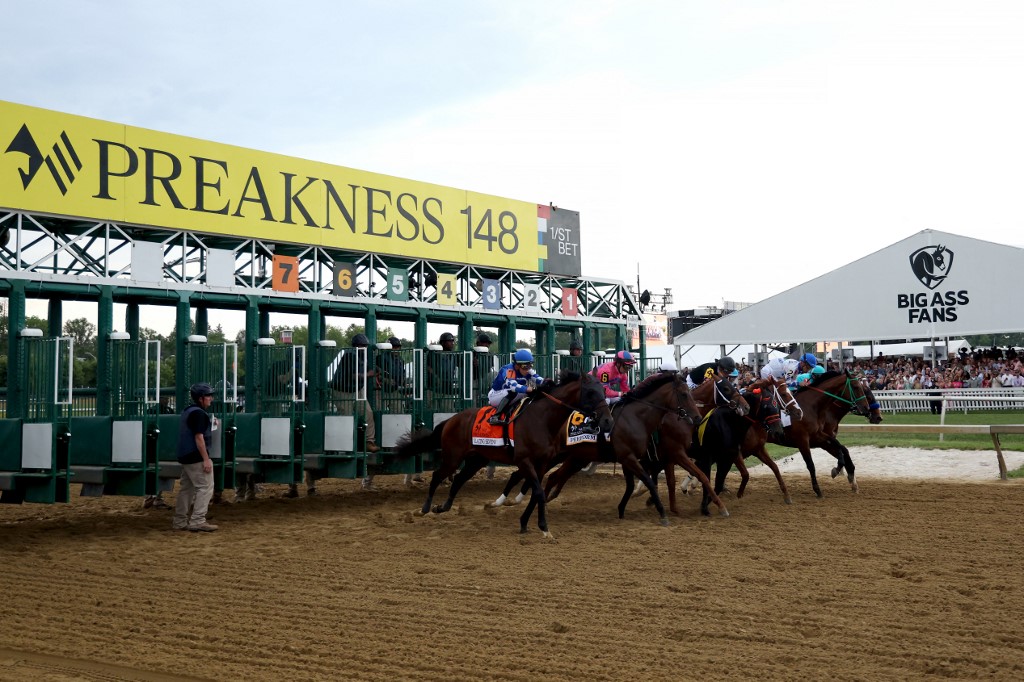
The Preakness Stakes is supposed to be the clean, brutal middle act of the Triple Crown. This year, it looks more like a bar fight in expensive silks. Golden Tempo took the roses and ran. No Triple Crown chase, no coronation tour, just a 14-horse demolition derby at Laurel Park where the 9-2 favorite couldn’t finish a mile last time out and a 70-1 Kentucky Derby longshot shows up looking like the smartest play on the board. The 2026 Preakness Stakes is the kind of wide-open, scratched-and-clawed middle jewel that bettors dream about. Check the latest 2026 Preakness Stakes odds from every top offshore sportsbook.
PREAKNESS STAKES ODDS
2026 Preakness Stakes Horse Profiles: 14 Runners, One Wide-Open Race at Laurel Park
Pimlico is under renovation, so the second jewel has decamped down the road to Laurel Park in Laurel, Maryland. Post time Saturday is 6:50 p.m. ET. Purse is $2 million. Distance is 1 3/16 miles, the shortest leg of the Triple Crown and the one that tends to favor stalkers and runners with tactical speed. Fourteen horses are entered. None of them is Golden Tempo. The Derby winner is skipping the Preakness again.
A Quick Note Before We Get Into It
Bookmakers Review may earn a commission when readers sign up with sportsbooks linked in this article. That arrangement doesn’t shape our analysis, our picks, or which horses we like. Our handicapping is independent. Our sportsbook reviews are independent. We tell you who we think wins, and we tell you where we’d bet. Two separate conversations. We’re up front about it so you can read the rest of this preview knowing exactly where we stand.
Iron Honor Is the Preakness Favorite. That Doesn’t Mean He’s the Best Horse.
A 9-2 favorite in a 14-horse field is the racetrack equivalent of nobody raising their hand. Iron Honor gets the nod because Chad Brown trains him, Flavien Prat rides him, and he won his first two starts. One of those was the Gotham Stakes, which sounds great until you check the distance. Then it asks a question.
His third start was the Wood Memorial in April. First time he’d been asked to go past a mile. Result: seventh. Not seventh by a length. Seventh period.
The 2026 Preakness Stakes runs at 1 3/16 miles. Do the math. The favorite has been one and done at the only distance test he’s ever faced past a mile, and now he’s asked to do it again in a Grade I against thirteen horses that all have something to prove. The 9-2 price suggests confidence. The race record suggests caution. This is the kind of favorite that gets bet because someone has to be the favorite, not because anyone really believes. That gap is where the value lives, and that’s the gap we’re going to keep poking at the rest of this preview.
2026 Preakness Stakes Horse Profiles: All 14 Runners
#1 Taj Mahal (5-1)
Jockey: Sheldon Russell | Trainer: Brittany Russell
The husband-and-wife team is bringing a colt who has never lost. Three starts, three wins, all at Laurel Park, including the Federico Tesio. Course-and-distance specialists are nothing to laugh at, especially when the course is the host track. Taj Mahal is a free-running type, which means he uses early speed to get out front and stay there. He was a $525,000 yearling, sired by 2016 Kentucky Derby winner Nyquist (same sire as Iron Honor, which is a fun coincidence and nothing more). Career earnings sit at $88,000, modest for a 5-1 second favorite, but the form line follows the talent. The catch: he’s never raced outside Laurel Park, and he’s never faced a field this deep. Front-runners in this Preakness are walking into a dogfight up top. Taj Mahal has the talent to be a player. He also has plenty of company in the speed department, which complicates the pace scenario before the gate even opens.
#2 Ocelli (6-1)
Jockey: Tyler Gaffalione | Trainer: D. Whitworth Beckman
Here’s where the eyebrow goes up. Ocelli is winless in seven career starts, which sounds like a death sentence until you look at where the losses came from. The most recent one: third in the Kentucky Derby at 70-1. A $2 show ticket on him paid $36.34. That’s not luck. That’s a horse who was completely overlooked at Churchill Downs and ran a race that put him in the top tier of three-year-olds nobody was talking about. Bought for $12,000. Career earnings of $609,800. The math does its own talking. He’s a stalker, which is exactly the running style that benefits when half a dozen frontrunners cook each other on the front end. Gaffalione ranks third in North American jockey earnings this year, which is not an accident. Of all the second-tier prices in this field, Ocelli is the one who has actually shown he can run with the best of his class in a Grade I. The 6-1 number still looks generous.
#3 Crupper (30-1)
Jockey: Junior Alvarado | Trainer: Donnie Von Hemel
The trivia is more fun than the form. The letter “C” has started the names of more Preakness winners than any other letter, with 17 in the books. And yes, the colt’s name does not refer to a leather strap that loops under a horse’s tail. It honors a person tied to his breeding farm in Kentucky. Cute story. The actual racing case is thinner. Crupper won the Bathhouse Row Stakes at Oaklawn Park last out, which is fine, but not Preakness fine. He’s a frontrunner, a homebred, with career earnings of $210,665. He’ll be in the mix early. The question is whether he can survive what looks like one of the more contested early paces of any Triple Crown race in recent memory. At 30-1, he doesn’t need to win to pay. A piece of the trifecta or super at that price funds a lot of mortgage payments. The win bet asks for too much. The exotic ticket angle is alive.
#4 Robusta (30-1)
Jockey: Rafael Bejarano | Trainer: Doug O’Neill
Robusta’s love language is snacks.@DougONeill1 @CalumetFarm pic.twitter.com/cmz9xaOVfb
— Preakness Stakes (@PreaknessStakes) May 13, 2026
Named for the coffee bean, which is more interesting than his last race. Robusta finished seventh in the Santa Anita Derby, a result that gets a horse to the Preakness gate only when the trainer has won the race before. Doug O’Neill won it in 2012 with I’ll Have Another, so he’s seen this movie. Robusta is sired by Accelerate, the Breeders’ Cup Classic winner who banked nearly $7 million on the track. Pedigree is real. Form is shaky. Career earnings are $83,500. He’s a homebred frontrunner, which means he gets thrown into the same speed-duel meat grinder as Taj Mahal, Chip Honcho, Crupper, Corona de Oro, and Pretty Boy Miah. Six horses cannot all lead. Robusta is the one most likely to compromise the leaders without being able to recover for himself. Tough spot. The Doug O’Neill flier is a real thing in this race, but the form numbers ask you to take a leap of faith that the pedigree is going to wake up on the second Saturday in May.
#5 Talkin (20-1)
Jockey: Irad Ortiz Jr. | Trainer: Danny Gargan
There’s an actual story here. Gargan’s father, Danny senior, was a jockey who won the 1973 Kentucky Oaks aboard Bag of Tunes and followed it up two weeks later with The Black-Eyed Susan on Fish Wife. The bloodline of the connections is loud. The colt himself is a $600,000 purchase with $288,625 in earnings and a third-place finish in the Blue Grass Stakes as his most recent line. Stalker style, which fits the projected race shape. Irad Ortiz Jr. is one of the three or four jockeys you want on your ticket when the pace gets nasty. Talkin shipped from Keeneland to Laurel Park on Tuesday, which gives him a few days to settle. The price is interesting. 20-1 in a field this deep feels like the market giving you room to play him underneath. Not the top of the ticket. Not the throwaway either. The kind of horse you find tucked into the second slot of a $1 trifecta and shrug if it cashes.
#6 Chip Honcho (5-1)
Jockey: Jose Ortiz | Trainer: Steven M. Asmussen
Asmussen is one of the winningest trainers in the sport, but the Triple Crown record has been an itch he hasn’t quite scratched in the way you’d expect. Chip Honcho gives him a live shot in a wide-open year. Last out, the colt finished fifth in the Louisiana Derby, which reads worse than it is. The race record looks like this: two wins, two seconds, one fifth. He’s won on a fast track. He’s won on a muddy track. That kind of surface versatility matters when the forecast is sketchy, and the cuppy strips at Laurel have eaten favorites before. Chip Honcho is a pacesetter, which puts him right in the teeth of the early traffic jam this race promises. Jose Ortiz can take a horse and rate, but rating in this field means surrendering position to half a dozen other front-runners who don’t want to give an inch. The 5-1 price says the market likes the trainer-jockey combo. The race shape says the trip is going to be uncomfortable.
#7 The Hell We Did (15-1)
Jockey: Luis Saez | Trainer: Todd Fincher
The name alone is worth the price of admission, and the horse himself is more than a punchline. Sired by 2020 Horse of the Year Authentic, with two wins and two second-place finishes in four career starts, including a runner-up in the Lexington Stakes at Keeneland on April 11. Career earnings: $134,818. Saez is one of those jockeys who shows up in big spots and doesn’t blink. The Hell We Did is a stalker, which means he tracks the early leaders and waits for the move turning for home. That style profiles well in this race if the pace plays out the way it looks. Todd Fincher isn’t a household name on the Triple Crown trail, but he’s also not somebody to dismiss because the marquee doesn’t recognize him. 15-1 is a fair price. There’s a version of this race where The Hell We Did sits chilly behind the speed, gets a clean run through the turn, and finishes in the trifecta. The win bet is a stretch. The exotic spot is real.
#8 Bull By The Horns (30-1)
Jockey: Micah Husbands | Trainer: Saffie A. Joseph Jr.
Last out, Bull By The Horns was dead last after six furlongs. Dead last. Then he uncorked a four-wide rally that won a four-horse photo finish in the Rushaway Stakes. That kind of move is the move you want in a Preakness where the pace looks like it’s going to set up for a closer. Saffie Joseph is the trainer who took Mage to a Kentucky Derby win in 2023, so he’s been here before, and Husbands rides with confidence even if he doesn’t carry the Hall of Fame weight of the Ortiz brothers. Two wins, no seconds, two thirds in five starts, with career earnings of $187,115. The price is 30-1. The running style is the one most likely to benefit from the pace meltdown the front half of this race is set up to produce. Bull By The Horns is exactly the kind of horse smart money tucks underneath in vertical exotics. Win price says you need a lot to break right. Place and show is a different conversation.
#9 Iron Honor (9-2)
Jockey: Flavien Prat | Trainer: Chad Brown
The favorite. The asterisk. Iron Honor was a $475,000 purchase sired by 2016 Kentucky Derby winner Nyquist. He started his career with two wins, including the Gotham Stakes, and then ran seventh in the Wood Memorial in April. That Wood Memorial was the first time he’d ever been asked to run past a mile. The Preakness will be his second race with two turns. Career earnings of $229,250 are respectable, but the resume is thin for a 9-2 chalk in a race this deep. Chad Brown is one of the best trainers in North America, full stop, and Flavien Prat doesn’t take many bad mounts. The connections aren’t the question. The distance is the question. The stamina is the question. The 9-2 price is the question. He’s a stalker, which means he needs to be close enough to pounce, and if the early pace forces him too far back, he doesn’t have a proven late kick to make up the ground. The favorite by default.
#10 Napoleon Solo (8-1)
Jockey: Paco Lopez | Trainer: Chad Summers
Two things you need to know. One, the horse was originally registered as “No Male Today,” the kind of name that earns a quick rebrand. Two, owner Al Gold renamed him after the fictional spy from The Man from U.N.C.L.E., the 1960s television series. That’s the kind of personality detail that doesn’t help you cash a ticket but does tell you something about the people behind the horse. The form line is mixed. He finished fifth in the Wood Memorial, the same race Iron Honor ran seventh in. Same field. Same distance. He beat the favorite by two positions. Speed-horse style, presses the pace and pulls away when the pace allows. Career earnings of $319,000 against a $40,000 purchase price give him one of the better return-on-investment numbers in the field. 8-1 puts him in that middle tier where the math gets interesting. Did he beat Iron Honor at the Wood by accident? Or did he show something the market is still discounting on account of the 9-2 favorite’s name on the program?
#11 Corona de Oro (30-1)
Jockey: John Velazquez | Trainer: Dallas Stewart
The kind of horse you respect for the connections more than the form. Velazquez won the Preakness aboard National Treasure in 2023, and Dallas Stewart has been second in the Preakness twice (Tale of Verve in 2015 and Macho Again in 2008). Three top-two finishes in the second jewel between the rider and the trainer. Corona de Oro himself is a $160,000 purchase with $92,540 in earnings and a third-place finish in the Stonestreet Lexington Stakes last out. He’s a frontrunner, which puts him in the speed duel up front with five other horses who want the same real estate. At 30-1, the win bet asks too much. The Dallas Stewart angle is real, and the John Velazquez angle is real, and the price gives you cover to use the horse on the deeper end of a superfecta. Stewart has knocked on the door twice in this race. Sooner or later, the door cracks open. That doesn’t make this the year. It does make Corona de Oro a logical underneath play at the price.
#12 Incredibolt (5-1)
Jockey: Jaime A. Torres | Trainer: Riley Mott
Incredibolt had his first day on the @LaurelPark track this morning in advance of the @PreaknessStakes. @jaimetorresjcky @Riley_Mott @PinOakStud pic.twitter.com/BKDAtEM52a
— Sean Collins (@BH_SCollins) May 14, 2026
This is where it gets fun. Riley Mott is the son of Bill Mott, who trained Sovereignty to the 2024 Kentucky Derby win. Sovereignty had won the Street Sense Stakes the year before. Which horse won the Street Sense Stakes this year? Incredibolt. Coincidence is not the right word. Pattern is. Incredibolt finished sixth in the Kentucky Derby, just outside the money, after running through the kind of trip that gets a horse beat without quite getting him knocked out of the race. Career earnings of $498,681 against a $75,000 purchase price. Stalker style, which fits the projected pace scenario cleanly. The pre-Virginia Derby line included a 25 1/4 length loss in the Holy Bull Stakes, which tells you the horse has been figured out somewhere between then and now. The Mott family runs young horses at the Triple Crown distances on purpose. Riley Mott training a Preakness contender out of the same playbook his father uses is not a footnote. The 5-1 price is honest. The angle is real.
#13 Great White (15-1)
Jockey: Alex Achard | Trainer: John Ennis
Great White stands 17.2 hands and weighs over 1,300 pounds, which makes him one of the largest horses in the field by a meaningful margin. Size isn’t always an asset in a route race, where flexibility and recovery matter more than mass. Last out, fifth in the Blue Grass Stakes on April 4. Acceptable form for a 15-1 horse. The scary part of his story is the Kentucky Derby that wasn’t. Great White was scratched for safety reasons moments before the start. He reared up in the gate, lost his balance, and flipped over backwards while loading. That’s not a horse that’s been right in a starting gate in a while. The other red flag: he has yet to win on anything other than a synthetic surface. Laurel Park is dirt. The price is fair given the question marks, but the question marks pile up fast. Stalker style. Big body. Gate concerns. Surface concerns. The kind of horse you can build a case for and a case against in the same paragraph, which usually means you don’t play him.
#14 Pretty Boy Miah (15-1)
Jockey: Ricardo Santana Jr. | Trainer: Jeremiah Englehart
This is Englehart’s first Triple Crown starter, a milestone worth noting even if it doesn’t move the needle on the betting board. The colt rolls into the Preakness off a starter optional claiming win at Aqueduct on April 25, which isn’t exactly the prep race resume of a Grade I winner. The angle is the blinkers. Englehart added them, and Pretty Boy Miah has gone wire-to-wire in both starts since. That’s a real change, not a cosmetic one. He’s a front-runner, which puts him in the early speed scrum with Taj Mahal, Crupper, Robusta, Corona de Oro, and Chip Honcho. Six speed horses in a 14-horse field. Somebody isn’t going to be in the lead. The blinker’s angle is fascinating. The class jump is enormous, from starter optional claiming to Grade I in three weeks. Santana is a competent rider who’s been in big spots before. 15-1 is more generous than the rest of the front-running types in the field, which tells you the market knows about the class question, too.
Who Wants the Lead? Mapping the Pace of the 2026 Preakness
Take a look at the running styles in this field.
- Taj Mahal: Free-running
- Crupper: Frontrunner
- Robusta: Frontrunner
- Chip Honcho: Pacesetter
- Corona de Oro: Frontrunner
- Pretty Boy Miah: Front-runner
- Napoleon Solo: Speed horse (presses the pace)
That’s six horses entering the race with a stated intention of being at or near the lead, seven if you want to throw Napoleon Solo into the mix. Seven horses can’t lead. Two, maybe three, get the front-end real estate. The other four to five will be in a knife fight for position through the first quarter, burning energy they don’t get back. Those fractions are going to be hot. The question is how hot, and that question gets answered in the first thirty seconds of the race.
Hot fractions are a closer’s best friend. They’re a stalker’s friend too, if the stalker is patient enough to let them play out and tactical enough to be in striking range when they do.
Who benefits? The closers. Bull By The Horns is the obvious one. The Rushaway Stakes win, where he was dead last after six furlongs, was a 4-wide rally in a four-horse photo. That move travels.
Who else? Ocelli, the Kentucky Derby third-place finisher at 70-1, ran a stalker’s race at Churchill and finished third behind two of the best three-year-olds in the country. Incredibolt sits in the same family of running style, with the Riley Mott playbook adding context. The Hell We Did and Talkin profile as the tactical stalkers who could find themselves in good spots if the trip plays out clean.
Which horse hurts the most? Iron Honor. The 9-2 favorite is a stalker who needs to be within striking distance, and if the front-end pace doesn’t soften him into position, he’s going to be too far back at the quarter pole to matter. The pace scenario is the favorite’s biggest problem in this race, and the market hasn’t priced it in yet.
Where the Sharp Money Is Going in the 2026 Preakness Stakes
The win bet on this race is a coin flip with too many coins. Take Iron Honor at 9-2, and you’re laying short on a horse with one race at the distance and a seventh-place finish to show for it. Take Taj Mahal or Chip Honcho or Incredibolt at 5-1, and you’re guessing which of three roughly equal horses gets the right trip. None of those bets feels like value. They feel an obligation.
The play is in the exotics.
Start with Ocelli. The Derby third-place line is the strongest piece of form in this field, full stop. He’s a stalker, the race shape suits him, and the price at 6-1 is the kind of mid-tier number where a win bet still pays a real return if the horse delivers. He’s the editorial pick to hit the board.
Build the exacta with Ocelli on top and the following options underneath:
- Incredibolt (5-1) for the Riley Mott family angle
- Bull By The Horns (30-1) for the closer benefiting from a pace meltdown
- Taj Mahal (5-1) is the home-track specialist with a perfect Laurel Park record
Reverse those tickets for security.
For the trifecta and superfecta, the 30-1 prices earn their keep. Crupper. Corona de Oro. Bull By The Horns. Plug a couple of those into the third and fourth slots, and if one of them sneaks in, the payout structure rewards the depth.
The favorite is the most attackable 9-2 chalk on a Triple Crown card in recent memory. That doesn’t mean you toss Iron Honor entirely. It means you don’t single him anywhere on the ticket, and you build your verticals around the horses who beat him in the projected race shape.
The Best Sportsbooks for Betting the 2026 Preakness Stakes
The Preakness is one of those races that pulls in a wider audience than the rest of the calendar. Casual bettors, NFL fans, and people who normally play parlays on Sunday all crowd in for two minutes of horse racing theater. The sportsbooks know it. The sign-up offers reflect it.
Bookmakers Review’s top-rated horse racing sites for the 2026 Preakness Stakes lean toward operators with deep parimutuel pools, fixed-odds wagering options on the major races, and rebate programs that pay you back a percentage of your handle. The sign-up offers are real money. The long-term value, though, lives in the rebate structure. A 5 percent rebate on losing wagers turns into a meaningful number for anyone who plays the Triple Crown card and stays in the game past Memorial Day.
For the casual bettor looking to put a few bucks on Ocelli or Bull By The Horns, the deposit-match offers are the headline. For the serious horseplayer treating the Preakness as part of a longer season, the rebate-and-rewards programs are where the real edge lives. Check the BMR sportsbook reviews for the current list of top-rated horse racing books and the sign-up offers attached to each.
Bet With Your Head, Not Over It
The Preakness pulls in plenty of bettors who don’t usually play the horses. Two minutes of action, a $2 million purse, a wide-open field. Easy to get carried away. So a few honest things before you head to the windows.
Set a bankroll before post time and treat it as the cost of a night out, not an investment. The money you bring to the windows is gone the moment you walk in. Anything that comes back is a bonus.
Don’t chase losses by jumping into the next race for makeup money. That’s how a Saturday at the track turns into a Sunday with regret.
The takeout on horse racing is steep. Even the best handicappers lose more often than they win. That’s the math, and the math doesn’t care about your hunch.
If gambling stops feeling like entertainment, stop. Call the National Council on Problem Gambling at 1-800-GAMBLER. Most states also offer self-exclusion programs. Use them. Bet responsibly.
The 2026 Preakness Verdict
Here’s the deal. The race is wide open. The favorite isn’t really a favorite, just the last horse standing when everyone else got marked down. The story that gets written on Saturday at Laurel Park belongs to a horse most casual bettors won’t see coming.
My call: Ocelli to hit the board. The Derby form is the truest line in this field, the stalker style fits the pace scenario, and the 6-1 price gives you room to play him on top and underneath without flinching.
Incredibolt is the alternate at 5-1. The Riley Mott angle is alive, the trip in the Derby was uglier than the result, and the running style profiles cleanly.
Bull By The Horns goes underneath in the exotics. A 30-1 price on a true closer in a race set up for closing kicks is the kind of value you don’t pass on.
Post time is 6:50 p.m. ET. See you at the windows.
Frequently Asked Questions
Where is the 2026 Preakness Stakes being held?
The 2026 Preakness Stakes runs at Laurel Park in Laurel, Maryland. The race has been temporarily relocated from its traditional home at Pimlico Race Course while Pimlico undergoes a multi-year renovation. Post time is 6:50 p.m. ET on Saturday, with a $2 million purse on the line at 1 3/16 miles.
Why is Golden Tempo not running in the 2026 Preakness Stakes?
The 2026 Kentucky Derby winner Golden Tempo isn’t entered in the Preakness field, which ends any Triple Crown chase before it begins. Reasons for a Derby winner skipping the second jewel typically involve recovery time, conditioning concerns, and the long-term value of preserving a top horse for fall targets. The practical effect for bettors is the same: the second jewel becomes a wide-open race for everyone else.
Which horse is the favorite in the 2026 Preakness Stakes?
Iron Honor is the morning-line favorite at 9-2. The Chad Brown trainee won his first two starts, including the Gotham Stakes, then ran seventh in his only test beyond a mile in the Wood Memorial. The favorite tag is more a function of a wide-open field than a dominant resume, which is exactly why the second tier looks so playable.
Who are the best longshots to watch in the 2026 Preakness Stakes?
Bull By The Horns at 30-1 is the standout closer in a race set up for closing kicks. Ocelli at 6-1 finished third in the Kentucky Derby at 70-1 and looks live again. Among the 30-1 shots, Crupper and Corona de Oro have a real shot at hitting the third or fourth slot of a vertical exotic, especially given Dallas Stewart’s history of running second in this race.
What's the distance of the 2026 Preakness Stakes?
The 2026 Preakness Stakes runs at 1 3/16 miles, making it the shortest of the three Triple Crown races. The Kentucky Derby is 1 1/4 miles. The Belmont Stakes is 1 1/2 miles. The Preakness sits between them and tends to favor horses with tactical speed and the ability to settle into a position close to the front, which is exactly the kind of trip the projected pace shape rewards this year.