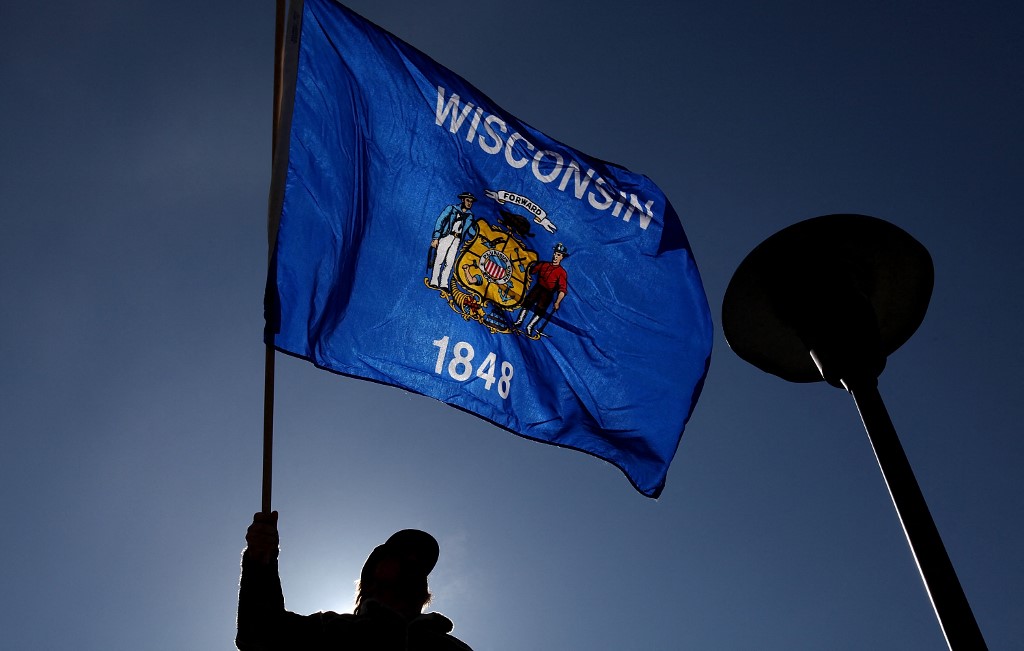
Wisconsin Governor Tony Evers signed a law legalizing online sports betting through amended compacts signed with the state’s 11 tribal nations. The regulatory framework will be created by the tribes and must be approved by the governor and sent to the Department of the Interior for approval.
Florida Blueprint
On Thursday, Governor Tony Evers signed AB 601, a measure allowing statewide mobile sports betting with the caveat that the servers must be located on Native American lands within the state.
The new law introduces a “hub and spoke” system, where the central server (“hub”) is located on tribal land and users across the state act as the “spokes.” It follows a recent federal court decision that allowed the Seminole Nation to run a similar online sports betting system in Florida, known as Hard Rock Bet.
The proposal has drawn opposition from companies like DraftKings and FanDuel, as well as anti-gambling groups and the conservative Wisconsin Institute for Law & Liberty, which argues the plan may violate the Constitution.
Under the federal Indian Regulatory Gaming Act, tribes must receive 60% of gross gaming revenue from operations on their land. National betting companies argue that giving up that share makes it difficult to justify operating in a market the size of Wisconsin. This will likely preclude the likes of DraftKings and FanDuel from entering the market if, and when, third-party operators are invited to participate.
“After the bill’s passage and signing, Wisconsin tribes interested in offering mobile sports betting would need to renegotiate their compacts with the state,” wrote State Senator Howard Marklein to a legislative committee. “Final approval would occur once those renegotiated compacts are approved by the Bureau of Indian Affairs (BIA) within the U.S. Department of the Interior.”
Gov Tasks Tribes With Fairness
Governor Evers’ biggest concern after signing the landmark legislation is that all the state’s tribes will share equally from their monopoly on mobile sports betting. He aims to ensure that even the smaller and financially weaker tribes receive their fair share of the economic benefits.
“A joint venture – with each Tribe contributing, and each Tribe benefiting in equal shares – is gaining traction in these discussions, and I strongly support pursuing this or a similar model,” Evers wrote.
Evers also urged those involved to “look beyond mere dollar signs and economics and insist these decisions also be guided by respect, humility, compassion, and solidarity.”
“I share the same goal as many of the Tribal Nations – to develop and embrace a model that each Tribal Nation can participate in with dignity and pride. I will do everything in my power to support models that address disparities rather than exacerbate them and reject models that leave some Nations with little more than they have now while others prosper and thrive,” Evers concluded. “Wisconsin cannot afford to continue to leave any Tribal Nation behind.”
There are still several steps that must be taken, with the most critical being a joint effort between all the tribes to create an acceptable regulatory framework that will be used in the amended compact and ultimately approved by the governor and the Bureau of Indian Affairs within the U.S. Department of the Interior.