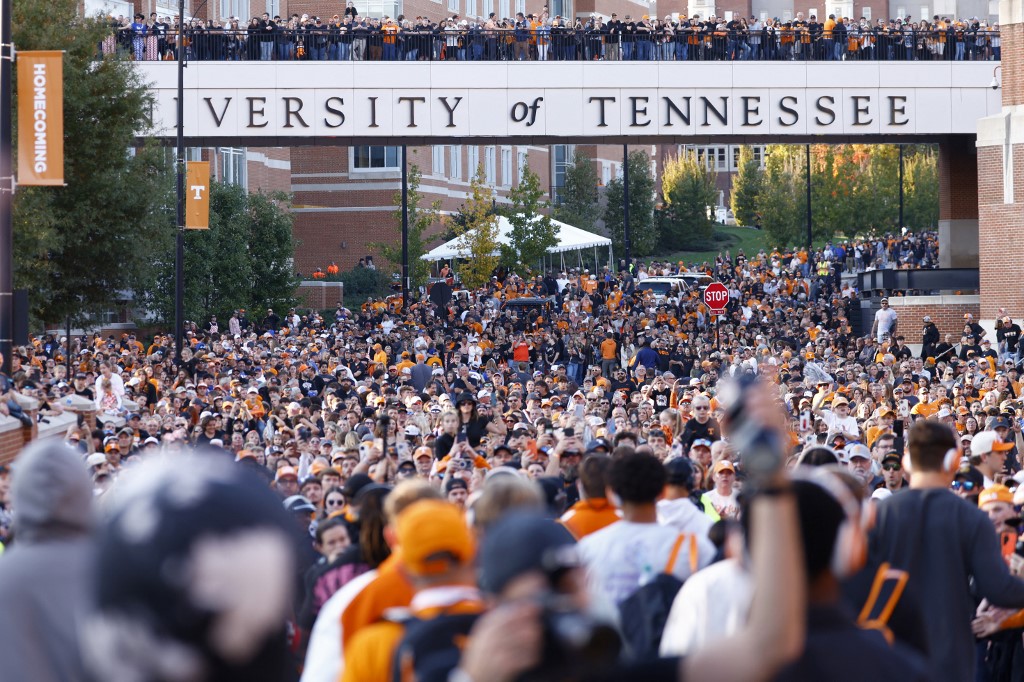
Tennessee Representative John Clemmons formally introduced House Bill 1768 on January 20th. This measure would ban sports betting access on all public college campuses and their satellites.
Companion Bills
In addition to House Bill 1768, Senator Jeff Yarbro sponsored Senate Bill 1831, which is a companion bill to Representative Clemmons’ measure. Both bills would effectively eliminate access to sports betting at any public college or university in the Volunteer State. It would also extend to any off-campus sports venues used for college sporting events and any facilities that are located within one contiguous mile of the main college campus.
The bills aim to protect the mental health, safety, and welfare of students, as well as to alleviate pressure on student athletes from their peers, which may arise due to financial incentives. The measures are a result of recent betting scandals affecting college sports, but whether they pass muster in their respective chambers is unclear at this point.
Sports Betting Revenue Remains Untouched
The sponsors were clear that their bills do not seek to unravel the sports betting market in Tennessee, as the industry has been a financial boon for the state. Taxes on sports betting generated approximately $87.569 million in revenue last year. Since passing mobile sports betting on November 1, 2020, the state’s tax coffers have swelled to well over $350 million in tax revenue, most of which is earmarked for education.
Should either bill succeed, its implementation would not occur until July 1, 2026.
College Crackdown
Many states across the nation that have launched sports betting markets have called for several sweeping changes vis-à-vis their institutions of higher learning and their relationships with mobile sports betting platforms. The NCAA has called for a nationwide ban on college player proposition wagers, arguing that the burden placed on collegiate athletes to exceed those numerical expectations can cause anxiety, depression, and diminished mental health.
“Sports betting issues are on the rise across the country, with prop bets continuing to threaten the integrity and competition, and leading to student athletes and professional athletes getting harassed. The NCAA has been working with states to deal with these threats, and many are responding by banning college prop bets,” NCAA President Charlie Baker stated previously.
It should also be noted that Tennessee has called for a ban on trading platforms like Kalshi, Polymarket, and Crypto.com, stating they are not licensed in the state, nor should they, like sports betting platforms, gain access to the market of college students attending public colleges or universities.
State Restrictions On College Sports Betting
But Tennessee is not the only state to tackle the issue of college students and the mainstream proliferation of mobile sports betting. Below are examples of other states’ rules and protocols regarding college athletics and sports betting.
- New York: Prohibits betting on any in-state college teams and events.
- New Jersey, New Hampshire, Rhode Island, and Washington, D.C.: Prohibit betting on in-state college teams.
- Connecticut, Massachusetts, and Maine: Prohibit betting on in-state teams, except for tournament games.
More states have expressed interest in limiting college player props and wagering on in-state college sports programs, but no formal legislation has been passed.