
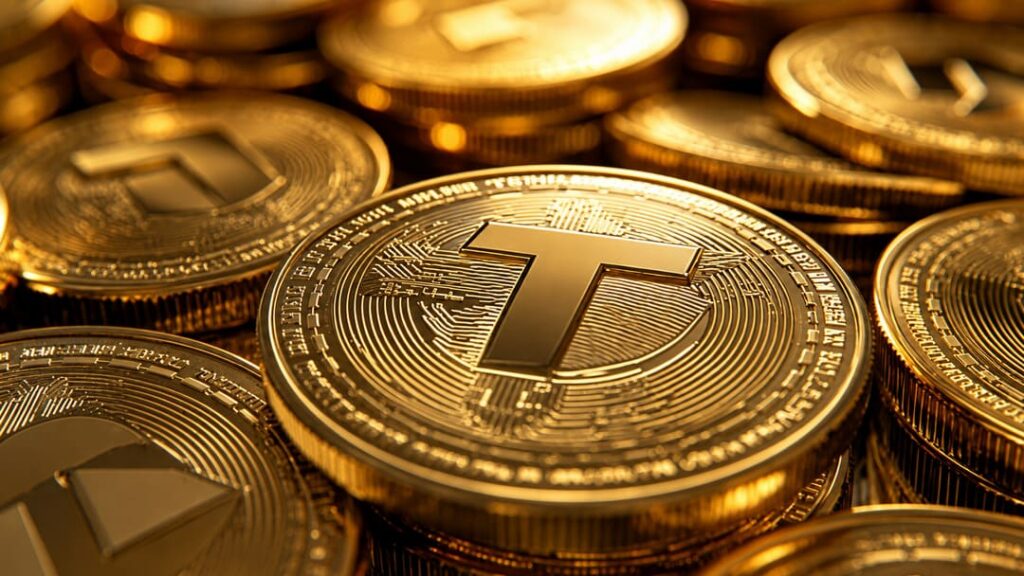
Stablecoin market dominance is no longer just a background metric for traders watching liquidity. Tether’s brief move ahead of Ethereum in market-cap snapshots turned a quiet defensive rotation into one of crypto’s clearest stress signals.
For bettors comparing best bitcoin sportsbooks, the message is practical rather than academic. Crypto users are not only asking which coin can rise the fastest; they are asking which asset can hold value long enough to move money safely when the broader market turns ugly.
Tether’s Ethereum Flip Was A Warning, Not A Victory Lap
Tether reportedly moved near a $187 billion market cap while Ethereum slipped near $185 billion, creating a rare moment where USDT appeared to edge past ETH. Live rankings can shift quickly, and Ethereum may reclaim the No. 2 position on any given screen, but the symbolism is hard to ignore.
A dollar-pegged token briefly standing above the largest smart-contract network says something about market psychology. Traders were not rewarding innovation, throughput, staking yield, or decentralized applications. They were rewarding liquidity, predictability, and the ability to sit out volatility without leaving crypto entirely.
That is the real story behind the flip. Tether did not need to become more exciting than Ethereum. It only needed to become more useful during fear.
Stablecoin Market Dominance Is Becoming A Risk-Off Signal
Stablecoins are often treated as parking lots for crypto capital. That undersells their importance. When stablecoin market dominance rises, it can show that users are choosing dollar liquidity over directional exposure.
That shift matters because Ethereum is not just another token. ETH remains central to decentralized finance, NFTs, smart contracts, and on-chain activity. If a stablecoin can briefly outrank it during market stress, crypto may be telling investors that utility without price stability is not enough in a selloff.
The comparison of Bitcoin vs USDT already makes this clear for betting users: Bitcoin often wins on recognition and support, while USDT can appeal to users who care more about stable value and smoother bankroll movement. The latest market-cap pressure makes that tradeoff feel larger.
It also connects directly to dollar stablecoin dominance, where the real debate is not only about crypto trading. Stablecoins are becoming payment infrastructure, betting rails, settlement tools, and a quiet extension of dollar demand inside digital markets.
Ethereum’s Problem Is Not Just Price
Ethereum’s weakness is easy to frame as a price chart problem, but that misses the deeper pressure point. ETH has to defend two identities at once: a speculative asset and the fuel for a major blockchain ecosystem.
During bullish stretches, that dual identity is a strength. Investors can buy ETH as both a technology bet and a market exposure bet. During stress, that complexity can become a drag because users may want Ethereum’s infrastructure without wanting ETH’s volatility.
That is where Tether’s rise becomes uncomfortable for crypto bulls. A stablecoin does not promise a new financial operating system. It promises a dollar-like unit that can move quickly across exchanges, wallets, and platforms.
A live tracker such as CoinGecko market rankings may keep changing the order, but the direction of the conversation is already clear. Traders are watching whether capital is rotating toward safety inside crypto rather than leaving the sector completely.
The Betting Market Angle Is Bigger Than Token Rankings
For sportsbook users, the Tether-Ethereum flip is not mainly about which asset sits second on a leaderboard. It is about how crypto rails behave when volatility becomes the headline.
A bettor using crypto wants three things: deposits that arrive, withdrawals that clear, and a balance that does not swing wildly before it is used. That is why crypto payments have become a competitive issue for betting operators rather than a niche banking feature.
Bitcoin remains the default crypto asset for many offshore betting users because it is widely supported and easier to understand. But stablecoins keep gaining relevance because they reduce the emotional friction of moving money during unstable markets.
The tradeoff is not risk-free. USDT carries issuer, reserve, network, and platform-support questions that Bitcoin users do not evaluate in the same way. Bettors still need strong wallet habits, especially around supported networks, test transfers, and withdrawal timing. BMR’s wallet security guidance matters even more when users move between BTC, USDT, exchanges, and sportsbook accounts.
| Market Signal | What It Suggests | Why Bettors Should Care |
|---|---|---|
| USDT near ETH market cap | Capital is moving toward stability | Stable payment rails may gain appeal |
| ETH market pressure | Risk assets are losing confidence | Crypto bankroll value can swing faster |
| Stablecoin growth | Users want dollar liquidity inside crypto | Deposits and withdrawals may feel easier |
| Live ranking shifts | Market stress remains unsettled | Timing matters when moving funds |
| Betting-platform support | Not every coin is accepted equally | Asset choice affects payment flexibility |
Operators Now Face A Cleaner User Preference
Crypto-friendly betting operators cannot treat all digital assets as interchangeable. A Bitcoin deposit, a USDT transfer, an ETH transaction, and a smaller altcoin payment all carry different user expectations and support risks.
When markets are rising, users may tolerate more volatility. When risk appetite collapses, they often care less about upside and more about avoiding unnecessary losses between deposit and withdrawal.
That creates a cleaner question for platforms: can they support crypto payments in a way that matches how users actually behave during stress?
A sportsbook that promotes crypto speed but offers poor network guidance may create avoidable user complaints. A platform that accepts stablecoins without explaining supported chains can still leave users exposed to wrong-network mistakes. A site that only supports volatile coins may look less convenient when users want dollar-denominated stability.
The rise of stablecoins also tightens the policy conversation. Coverage of crypto betting regulation has already shown how payments, prediction markets, and gambling-style products are moving closer together. Stablecoin growth gives regulators another reason to watch how money moves across offshore platforms, exchanges, and event-based markets.
The Next Signal Is Whether Safety Beats Speculation
The next test is not whether Tether stays above Ethereum for a full week. The more important question is whether stablecoin balances keep growing while risk assets struggle to recover.
If USDT continues to absorb liquidity, crypto may be entering a phase where users remain inside the ecosystem but refuse to take much market risk. That is different from a full exit. It means the user base still wants crypto rails, but not necessarily crypto volatility.
For Ethereum, the challenge is to prove that its ecosystem can keep commanding value even when traders prefer dollar-like assets. For Bitcoin, the challenge is to defend its role as the default crypto payment and store-of-value asset while stablecoins win more day-to-day utility.
For betting users, the lesson is straightforward. Stablecoin market dominance is becoming a live signal for how crypto users think under pressure. When Tether can briefly challenge Ethereum, the market is not just ranking coins. It is voting for liquidity, speed, and capital preservation over speculation.
Tether FAQs
What Is Stablecoin Market Dominance?
Stablecoin market dominance measures how much of the crypto market is held in dollar-pegged tokens like USDT and USDC. When it rises, traders may be choosing liquidity and safety over riskier crypto assets.
Why Did Tether Passing Ethereum Matter?
Tether briefly challenging Ethereum showed how defensive crypto users have become. Even if rankings shift quickly, the move signaled stronger demand for dollar-like stability during market stress.
Does This Mean Stablecoins Are Safer Than Bitcoin Or Ethereum?
Stablecoins reduce price volatility, but they are not risk-free. Users still face issuer risk, reserve questions, supported-network issues, and platform policies when using stablecoins for deposits or withdrawals.