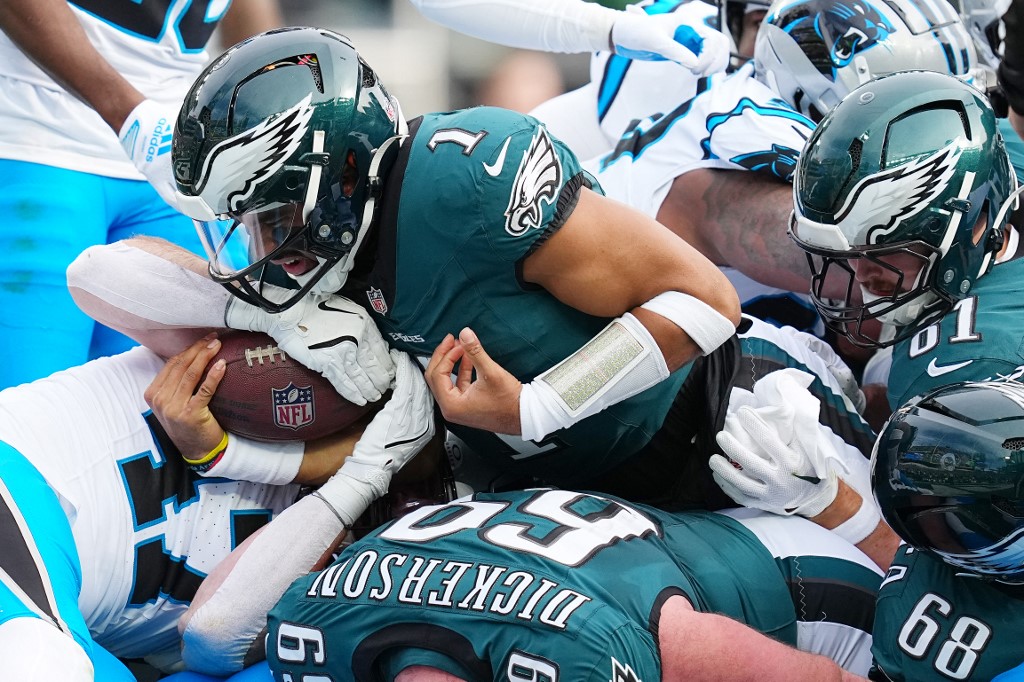
Due primarily to its local NFL entry, the Philadelphia Eagles, not competing in the Super Bowl, Pennsylvania’s year-over-year sports betting handle dipped in February, but revenue rose dramatically.
Eagles Loss Is Bookmakers’ Gain
Fans bet with their hearts and not with their heads, which normally yields disastrous results for them but a financial windfall for the bookmakers. However, in February 2025, the opposite occurred, with legions of Pennsylvania fans heavily betting on the Philadelphia Eagles as they advanced to the Super Bowl.
We all know that the Eagles not only won the game but also trounced Kansas City, 40-22, and easily covered the point spread. That outcome sent shockwaves of jubilation throughout the Keystone State as fans celebrated the Eagles’ dominating performance and saw local sports bettors eagerly collect their winnings, which cost sports betting operators $6 million on a single game.
No Local Team, Better Sportsbook Results
Yet, this season, the Eagles were ousted from the playoffs in the opening round by the San Francisco 49ers, 23-19, which meant Super Bowl betting in Pennsylvania would likely decrease. However, there would be no heavy liability on either team, as the local entry would not be competing.
And that is precisely how things manifested in February 2026, as the sports betting handle decreased 21.7% to $592.5 million, its lowest level since August.
However, year-over-year online and retail sports betting revenue soared a whopping 60.7%, from $34 million in February 2025 to $54.5 million in February 2026. The state’s tax coffers also swelled from less than $3 million last February to $12.9 million this February.
Super Bowl Delivers Huge Win
In this year’s Super Bowl, where the Seattle Seahawks defeated the New England Patriots 29-13, Pennsylvania sportsbooks earned $24.7 million from this one game, a significant turnaround from the $6 million loss they experienced the previous year when the Eagles won.
As usual, the mobile sports betting handle significantly exceeded that of brick-and-mortar locations, generating $568.9 million of the total $592.5 million in wagers and contributing $54 million to February’s revenue of $54.5 million.
FanDuel Reigns Supreme in February
It is not unusual to see FanDuel at the top of the revenue charts, and February is no exception to that rule. FanDuel led all challengers with a handle of $191.5 million and $24.2 million in revenue. Below is a chart highlighting Pennsylvania’s top five sportsbooks in February.
| Sportsbook | February Handle | February Revenue |
| FanDuel | $191.5 million | $24.2 million |
| DraftKings | $179.4 million | $14.5 million |
| Fanatics | $49.5 million | $4 million |
| BetMGM | $40.7 million | $3.2 million |
| Bet365 | $34.5 million | $3.1 million |
Despite FanDuel’s dominating performance in Pennsylvania and throughout the nation’s markets that it serves, its parent company, Flutter, has seen its stock crater over the past three months, declining from a high of 221.42 to 104.81 as of this writing.
Many believe this drop is due to the prediction markets that are offering sports event contracts cutting into the mobile sportsbooks’ profits, prompting FanDuel to create its own prediction platform, FanDuel Predicts. However, in a recent earnings call, Flutter CEO Peter Jackson discussed how the prediction platforms were affecting his subsidiary’s business, and he didn’t appear fazed.
“As you’d expect, we’ve undertaken a comprehensive review and found no evidence of material cannibalization on our existing business,” Jackson told analysts in reference to declining sports handle. “The opportunity across prediction markets is certainly far bigger than any potential cannibalization of existing sports.”