Prediction markets are taking legal fire from many different organizations, most notably state gaming commissions.
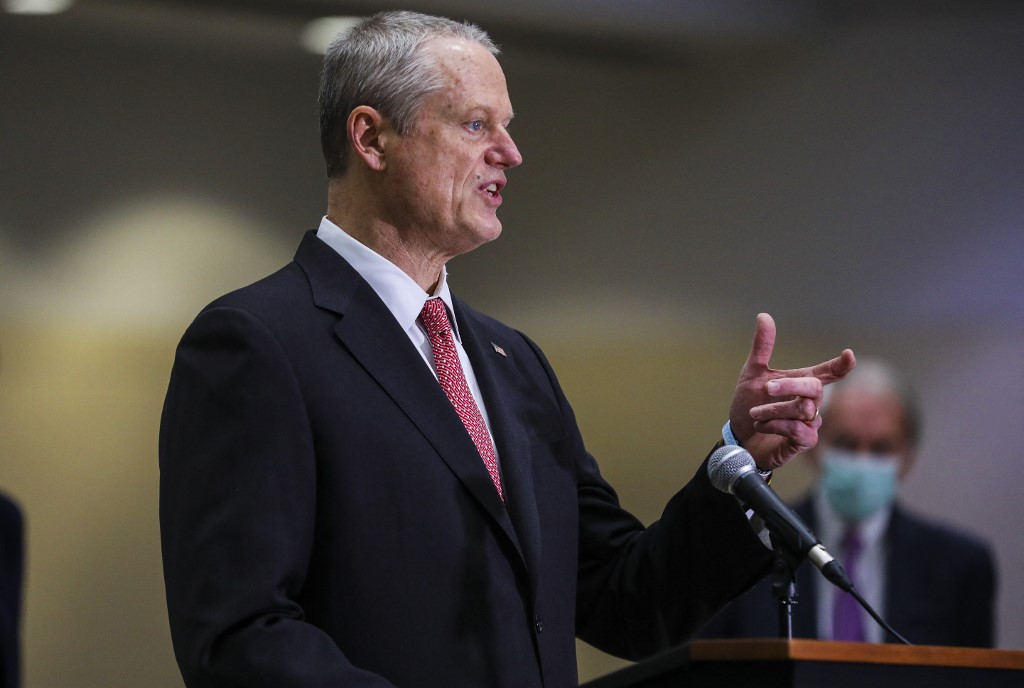
Count the NCAA as one more after its president, Charlie Baker, wrote a letter to newly installed Commodity Futures Trading Commission (CFTC) Chairman Michael Selig, asking him to ban prediction markets from offering collegiate sports event contracts until safeguards are instituted.
Baker Calls Foul
Former Massachusetts governor and current president of the NCAA, Charlie Baker, has never been keen on the industry of college sports betting. Moreover, he has called for the abolition of collegiate player props in every jurisdiction in which mobile sports betting exists.
Baker has had some degree of success in that regard, but he has now turned his sights on the prediction markets, which are offering sports event contracts without the requisite guardrails required of state-sanctioned sportsbooks.
This has prompted him to write a letter to CFTC chief Michael Selig in which he lists several guardrails that are imposed on mobile sportsbooks by state gaming commissions but are not required of prediction markets by the CFTC.
Running Amok
Prediction markets have been offering sports event contracts for well over a year and have been allowed to operate throughout the nation due to their status as a federally licensed entity of the CFTC. They do not have to abide by any rules and protocols set by state gaming authorities, nor are they required to pay taxes to the states on their profits.
Naturally, this situation has not sat well with state gaming agencies and the attorneys general of those states, prompting a blizzard of cease-and-desist letters, as well as several court battles at the state and federal levels. Although the prediction markets prevailed in the initial court rulings, the situation seems to be shifting slightly against them.
Many believe the legality of prediction markets offering sports event contracts won’t be settled until it reaches the US Supreme Court, assuming the justices decide to hear the case. Therefore, it should be a few more years of legal turmoil between the prediction platforms and the states that abhor them.
However, NCAA President Charlie Baker does not want to wait that long and lists several reasons why he has called on the CFTC to institute guardrails for the prediction markets.
“First of all, you can start doing it at the age of 18,” Baker said. “[In] almost every state, you can’t gamble legally until you’re twenty or twenty-one; that’s problem number one. Problem number two is they don’t collect the kind of data that you’re required to collect if you’re a sportsbook.”
The data Baker is referring to includes geolocation tracking and comprehensive gaming logs that are required by state law to share with integrity monitoring firms such as IC 360 and Sportradar. This practice has led to the arrests of dozens of college athletes and bad actors in point-shaving scandals.
As of this writing, no such system has been implemented by the CFTC for its prediction markets offering sports event contracts.