
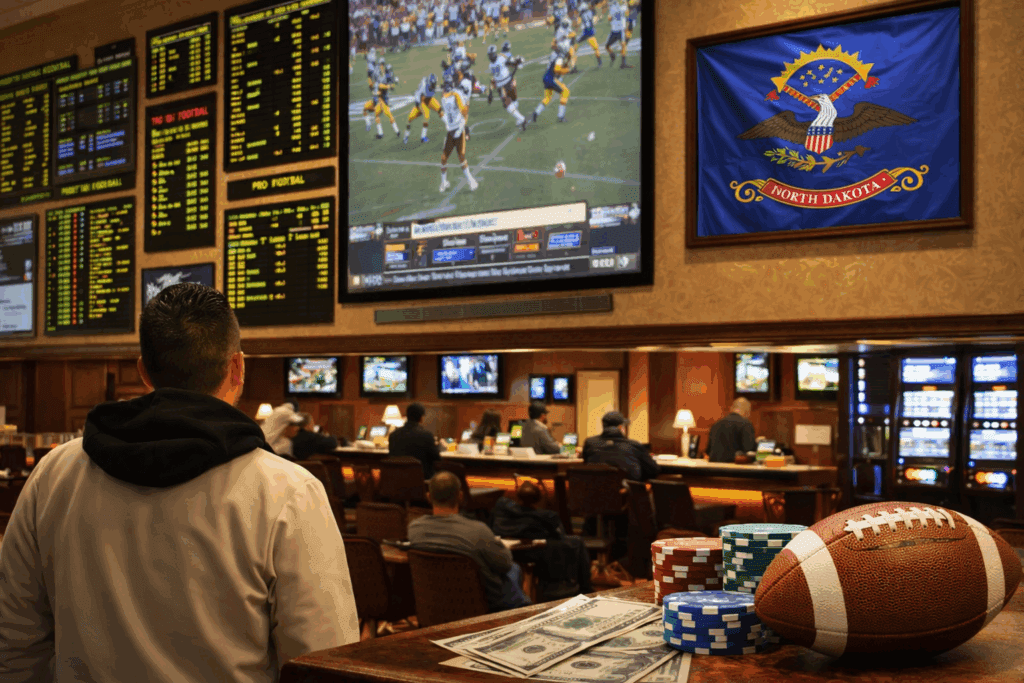
The wrong sportsbook does not rob you with one dramatic, villainous move. It bleeds you quietly. A withdrawal that takes nine days instead of nine hours. A welcome bonus that vanishes behind a rollover clause you never saw coming. A spread that is always half a point worse than the number posted across the street. A customer service agent who responds with the warmth and usefulness of a locked door. None of it feels catastrophic in the moment. That is the trick. By the time you notice the pattern, your bankroll has already been hollowed out from the inside.
This is where profitmaxxing and betmaxxing come in. Think of them as the bettor’s operating system for refusing to get played. Profitmaxxing is not about chasing longshots or pressing your luck. It is the discipline of optimizing every line, every bonus, every payout channel to extract maximum return from your action. Betmaxxing is its partner: scaling your wagers with full freedom, across every market you want, without a corporate algorithm deciding you have won too much this month. Together, they represent a simple philosophy. Bet sharper. Choose better, trusted sportsbooks. Protect your edge. And never, under any circumstances, donate your dough to a weak operator.
Top 10 Signs You’re Betting At The Wrong Sportsbook
The ten red flags below are a field guide for the bettor who suspects something is off. Maybe your last withdrawal is still “processing.” Maybe your max bet got cut in half after a good weekend. Maybe you logged in yesterday and realized you have not received a single promotion since your first deposit. Whatever lit the fuse, you are here because you want the truth. We are going to give it to you straight. Whether you’re an experienced bettor or looking to open your first sports betting account, keep reading to find out where the serious money actually moves.
The Sports Betting Industry At A Glance
Something has shifted in the betting landscape over the last two years, and it is not good for the people actually placing wagers. The legalized U.S. market exploded with promise. Billboards. Podcast sponsorships. Free-bet blitzes that made it rain like a busted sprinkler. But beneath that shower of promotional cash, a quieter machine was being built. A machine designed to identify winning bettors, restrict their accounts, and squeeze every dollar of margin from the recreational player who does not know any better.
The terms profitmaxxing and betmaxxing did not materialize out of thin air. They were born in betting Discords and private forums where sharp bettors compared notes and realized, almost simultaneously, that the mainstream apps were rigged against anyone who showed a pulse of competence. One guy gets his max bet cut to $10 on NFL sides after a 58% ATS season. Another watches a four-figure withdrawal sit in “pending” status for twelve days. A third runs the numbers and discovers he has been laying -115 juice all year while three offshore books were posting the same line at -105. The math added up to a collective gut punch: these platforms do not want skilled bettors. They want compliant ones.
That realization is the origin story of both concepts. Profitmaxxing became the framework for treating every basis point of value like it matters, because over a full season, it does. Betmaxxing became the anthem for bettors who refused to let an algorithm dictate how much they could wager or which markets they could access. Put them together, and you get something more than slang. You get a litmus test for whether your sportsbook deserves your action.
The uncomfortable truth? Most regulated domestic books fail that test. They have turned betting into a sanitized, heavily surveilled consumer experience where winning is treated as a bug, not a feature, and the bettor is one profitable week away from a throttled account.
So how do you know if your current book is the problem? Start here.
Top 10 Sportsbook Red Flags: Are You Using the Wrong Bookmaker?
Red Flag #1: Your Withdrawals Move Slower Than a Congressional Hearing
You won. Congratulations. Now try to get paid. If your sportsbook takes more than 48 hours to process a standard withdrawal and more than a week to actually land funds in your account, you are dealing with a book that treats your money like its money. Slow sportsbook withdrawals are not a minor inconvenience. They are a deliberate friction point. The longer your cash sits in limbo, the more likely you are to cancel the withdrawal and keep betting. That is not an accident. That is the business model.
The profitmaxxing standard: same-day crypto payouts, 24-hour e-wallet transfers, and no runaround on wire requests. The best offshore sportsbooks hit these benchmarks routinely. If yours does not, ask yourself why.
Red Flag #2: Your Account Gets Limited the Moment You Start Winning
This one burns worse than anything. You do the homework. You study matchups, track line movement, and identify value. You string together a profitable stretch. And then, without warning, your maximum bet drops from $500 to $25. No explanation. No appeal. Just a silent algorithmic knee to the groin.
Sportsbook account limits are the single biggest betrayal in modern wagering. A book that restricts winning players is telling you, in the clearest possible language, that it only wants losers at the table. Sharp bettors have been screaming about this for years. If your book limits accounts after a few good weeks, pack your bags.
Red Flag #3: The Odds Are Garbage and Nobody Told You
Pull up your go-to book right now. Check the NFL spread. Check the NBA total. Now compare those lines to three or four other sportsbooks. If you are consistently seeing -115 or -120 on standard sides and totals while other books are posting -110 or even -105, you are paying a hidden surcharge on every single bet. A sportsbook odds comparison takes three minutes. Those three minutes could save you thousands over a season.
Reduced juice is not a gimmick. It is the single most impactful profitmaxxing tool available to any bettor at any level. The difference between -110 and -115 on a thousand bets is staggering. Do the math. Then do something about it.
Red Flag #4: Bonus Terms That Require a Law Degree to Decode
A sportsbook deposit bonus should be a handshake, not a trap. But too many books bury punishing rollover requirements deep in terms and conditions that read like they were drafted by a team of hostile attorneys. A 10x or 15x rollover on a bonus turns “free money” into an anchor chained to your bankroll. Bad sportsbook bonus terms are designed to keep your deposits locked inside the ecosystem while giving you the illusion of generosity.
Read the fine print. Every time. If the rollover requirement is above 5x, if there are game-type restrictions, if the bonus expires in seven days, walk away. That is not a bonus. That is a leash.
Red Flag #5: Customer Service Is a Bot Reading a Script in a Language It Does Not Understand
You have a problem with your account. You open the live chat. A bot named “Alex” or “Jordan” greets you with the enthusiasm of a dead battery and immediately asks you to “please provide your account number so we can assist you better.” Twenty minutes later, you have been transferred twice, answered the same security question three times, and received zero resolution.
Sportsbook customer service quality is one of the fastest ways to gauge how a book actually values its players. If you cannot reach a real human within five minutes, if there is no phone support, if email responses take 72 hours, you are not a priority. You are an afterthought.
Red Flag #6: The Sportsbook Is Not Listed as Trusted by BookmakersReview.com
This one is binary. Either a sportsbook has been vetted, reviewed, and rated by an independent authority, or it has not. BookmakersReview.com has spent years building the most comprehensive sportsbook reputation database in the industry. We track payout speed, complaint resolution, bonus transparency, licensing, and player feedback across hundreds of online betting sites.
If your betting platform is not on our list of trusted sportsbooks, that should give you serious pause. If it appears on our sportsbook blacklist, stop depositing today. Our online sportsbook reviews exist because nobody else was willing to hold these operations accountable. Check the rating before you check the odds.
Red Flag #7: Verification Feels Like a Customs Interrogation
Know Your Customer regulations exist for a reason. Nobody is arguing against basic identity verification. But there is a line between reasonable compliance and outright harassment, and plenty of books have pole-vaulted over it. If your sportsbook is asking for utility bills, bank statements, selfies holding your ID next to your face, and a note from your mother before releasing a $200 payout, the verification process is being weaponized as a withdrawal delay tactic.
Sportsbook verification problems are one of the top complaints in every betting forum on the internet. Legitimate books verify you once, quickly, and never bother you again. Predatory ones use verification as a revolving door.
Red Flag #8: The Market Selection Is Thin as Gas Station Coffee
You want to bet on Korean baseball at 4 AM. You want to hammer a prop on the third set of a WTA clay-court match. You want player-level derivatives on a Thursday night MAC game. And your sportsbook offers… the big four leagues, maybe some UFC, and a golf market that has not been updated since the Ryder Cup.
Thin market selection is a dead giveaway that your book is not built for serious action. The best offshore betting sites offer thousands of markets daily, covering everything from darts to Bangladeshi cricket to esports. Betmaxxing requires inventory. If your book does not have it, someone else does.
Red Flag #9: Crypto Is Treated Like Contraband
It is 2026. If your sportsbook does not offer fast, seamless cryptocurrency deposits and withdrawals, it is either technologically stuck in 2018 or deliberately limiting your payment options to maintain control over your funds. Crypto payouts are the gold standard for speed and privacy. Bitcoin, Ethereum, Litecoin, USDT. Pick your lane. But you should have a lane.
Books that fumble crypto integration or refuse to support it are telling you they prefer the friction of traditional banking because that friction benefits them, not you.
Red Flag #10: The Promotions Dried Up After Your First Deposit
You got the big welcome bonus. The first week was a parade of free bets and boosted odds. Then, silence. No reload bonuses. No loyalty rewards. No seasonal promotions. The sportsbook treated your sign-up like a one-night stand and ghosted you the morning after.
Ongoing sportsbook promotions are a direct indicator of how a book values retention over acquisition. The top-rated offshore sportsbooks run continuous reload offers, referral bonuses, rebate programs, and contest promos because they want you to stay. If your book only courted you once, it never planned to treat you right.
The Offshore Sports Betting Alternative: Where Real Bettors Actually Bet
So you have checked the list. Maybe three of those red flags hit. Maybe seven. Maybe all ten, and you are sitting there wondering how you ever trusted your loot to an operation that treats winners like criminals and losers like ATMs.
Here is where the conversation turns. The best offshore sportsbooks exist in a parallel universe where the bettor is the priority, not the afterthought. We are talking about operations that have survived for a decade or more in a competitive, unforgiving market by doing one simple thing: paying their players quickly, fairly, and without drama.
What does a legitimate offshore book actually look like? High betting limits that do not get slashed the second you string together a winning week. Reduced juice on major markets, saving you real money on every single wager. Same-day crypto payouts that land in your wallet before your morning coffee gets cold. Generous, transparent reload bonuses with rollover requirements that a normal human can satisfy. And market depth that lets you bet anything, anywhere, anytime.
The skeptics will ask: But is offshore betting safe? The honest answer is that it depends entirely on which book you choose. An unvetted, unlicensed operation running out of a basement is a nightmare. A battle-tested, independently reviewed offshore book with a decade-long track record and thousands of resolved player complaints is a fortress. That is why sites like BookmakersReview.com exist. We separate the legitimate from the predatory, so you do not have to learn the difference with your own money.
Compare offshore sportsbooks using our rankings. Read the player reviews. Check the complaint history. Trust the data, not the advertising. The safest offshore sportsbooks are not hiding. They are sitting right there on our ratings page, waiting for you to stop settling for less.
How to Switch Sportsbooks Without Losing Your Shirt
Migrating your bankroll from a bad sportsbook to a better one sounds simple. It is not. There are pitfalls, and if you are not careful, the transition itself can cost you. Here is the tactical playbook.
Step 1: Withdraw everything first. Do not leave a dime in your old account. Request a full withdrawal before you even create an account somewhere else. If the book stalls, document every interaction. Slow-rolled final withdrawals are one of the oldest tricks in the bad-book playbook.
Step 2: Screenshot your bet history. Before you close anything out, grab screenshots of your wager history, bonus terms, and any pending promotions. If a dispute arises later, you want receipts. Every single one.
Step 3: Research before you deposit. Do not jump from one bad situation into another. Read online sportsbook reviews on BookmakersReview.com. Check the payout ratings. Look at the bonus terms side by side. Compare odds on the same market across three or four books. The whole point of switching is to upgrade, not to trade one set of problems for a different set.
Step 4: Start with a small test deposit. Once you have picked your new home, deposit a modest amount and run a full cycle. Place a few bets. Request a withdrawal. Time it. Test the customer service. Make sure the experience matches the reputation before you move your full stack.
Step 5: Diversify your action. The sharpest bettors do not rely on a single sportsbook. They keep accounts at three, four, sometimes five books to line-shop, grab the best number, and spread their risk. Betmaxxing is not about loyalty to one brand. It is about access to the best line on every single bet.
Step 6: Go crypto from day one. If your new book supports Bitcoin or another major cryptocurrency, use it. Crypto deposits are instant. Crypto withdrawals are the fastest in the industry. And you avoid the banking headaches that plague traditional payment methods. This is the profitmaxxing move that pays dividends from your very first transaction.
Responsible Gaming: The Line You Do Not Cross
None of this matters if you cannot control the action. That is not a lecture. That is survival advice from people who have seen what happens when the betting stops being fun and starts becoming a compulsion.
Set a bankroll. A real number. Written down. Not “whatever is in my checking account.” A dedicated, walled-off amount that you can lose entirely without missing rent, without skipping meals, without lying to anyone about where the money went. If you cannot set that number honestly, you are not ready to bet at all.
Set time limits. Set loss limits. Use the responsible gaming tools that reputable sportsbooks provide, and if your book does not offer those tools, add that to the red flag list. The best books in the world are worthless if you are chasing losses at 3 AM with money you cannot afford to burn.
If the action ever stops feeling like entertainment and starts feeling like a job, you are losing. Step back. Call the National Council on Problem Gambling at 1-800-522-4700 or text them. No shame in it. The sharpest move any bettor can make is knowing when to sit the hand out.
The Bottom Line
You did not start betting to get slow-played on withdrawals, limited for winning, and force-fed garbage odds by a sportsbook that spends more on celebrity endorsements than it does on paying its customers. You started because you are sharp, you love the competition, and you wanted to put your knowledge to work. Somewhere along the way, the wrong book got between you and your money.
That ends now.
Go through the ten red flags above. Be ruthless. If your current sportsbook fails on even three or four of those points, you already know the answer. The question is whether you are going to do something about it or keep bleeding value one bet at a time.
Profitmaxxing and betmaxxing are not just internet slang. They are a philosophy. Every line you accept, every payout you wait for, every bonus you roll over, every market you settle for… it all compounds. The bettors who treat their sportsbook selection with the same discipline they bring to their handicapping are the ones who survive long-term. Everyone else is just donating to the house with extra steps.
Check the BookmakersReview.com sportsbook ratings. Read the reviews. Compare the bonuses, the payout speeds, and the odds. Find a book that respects your action, pays you fast, and does not flinch when you win. They exist. We have ranked them. All you have to do is stop accepting less than you deserve.
Your bankroll is waiting. Stop punishing it.
FAQs
How do I know if I joined a bad sportsbook?
The clearest warning signs include slow or delayed withdrawals, sudden account limits after winning, poor odds compared to competing books, complicated bonus rollover requirements, and unresponsive customer service. If your sportsbook regularly frustrates you when you try to get paid or places restrictions on your betting activity, those are textbook red flags that you need a better book.
What makes an offshore sportsbook trustworthy?
Track record, transparency, and independent review. A trustworthy offshore sportsbook has years of operational history, consistently fast payouts, clearly written bonus terms, responsive human customer support, and positive ratings from independent review sites like BookmakersReview.com. Licensing, complaint resolution history, and player feedback all factor into trustworthiness.
Why did my sportsbook limit my account?
Most domestic sportsbooks use algorithms to flag and restrict profitable bettors. If you have been consistently winning, shopping for the best lines, or betting into steam moves, the book may consider you a “sharp” and reduce your maximum wager amounts. This practice is widespread among state-regulated U.S. books and is one of the primary reasons experienced bettors migrate to offshore sportsbooks that welcome all action.
Should I leave my current sportsbook?
If your book is delivering slow payouts, limiting your bets, offering worse odds than competitors, or making it difficult to access your own money, yes. Withdraw your funds, research alternatives through trusted review sites, and test a new book with a small deposit before committing your full bankroll.
What should I check before joining an online sportsbook?
Before you deposit anywhere, check the book’s payout speed and reliability, odds quality versus competitors, bonus terms and rollover requirements, market selection depth, customer service accessibility, cryptocurrency support, and independent ratings and reviews. A few minutes of research can save you months of frustration and thousands in lost value.
*The line and/or odds on picks in this article might have moved since the content was commissioned. For updated line movements, visit BMR’s free betting odds product.


