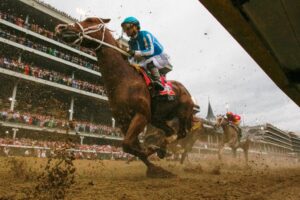
Preakness Stakes History: 151 Years of Past Winners, Records & Memorable Moments

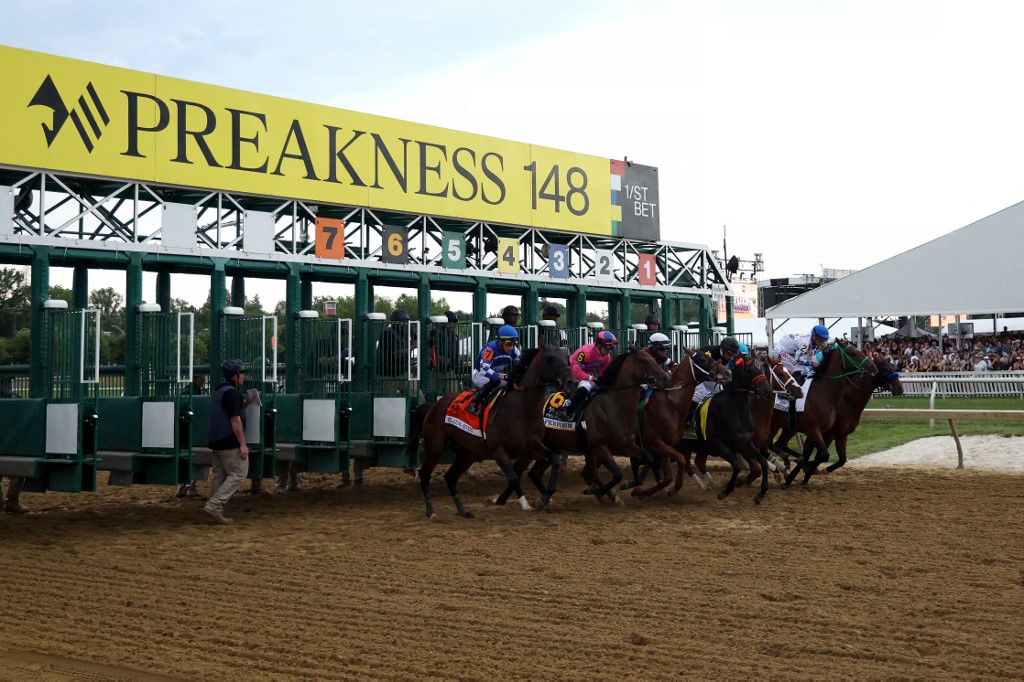
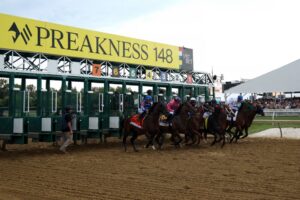
The grandstand at Old Hilltop sits empty this May. Bulldozers gnaw the wood. A century and a half of cigar smoke, nervous sweat, and cheap domestic beer has been bagged up and carted off twenty miles south. The 151st Preakness Stakes runs Saturday, May 16, at Laurel Park. First time. The Derby gets the roses and the Hollywood close-up. The Preakness gets the dirt under its fingernails.
Preakness Stakes History: 151 Years of Past Winners, Records & Memorable Moments
The Preakness has a 151-year ledger, and the names on it are screaming a message at you. Read the past winners. Study the records. Watch the chaos repeat itself in slow motion. Then walk to the window with a plan. We’re going to hand you the lore, the legends, and the angle to bet this thing sharp.
The Preakness Stakes: Where Triple Crown Dreams Go to Die (or Become Immortal)
The Preakness has always been a meat grinder. Two weeks. That’s the window. Fourteen days separate the Derby’s twenty-horse stampede from this 1 3/16 mile gut check. No other major sport asks a 1,200-pound animal to recover from that level of punishment on that kind of clock.
So what does the race reward? Toughness. Tactical speed. A trainer who can bring a horse back hot. The Derby winner shows up with a target stitched to his blanket. New shooters arrive looking for blood. The Preakness chews up favorites and spits out longshots with names you can’t pronounce.
Want a Triple Crown? You have to win here. Skip Baltimore (or Laurel, this year) and the dream dies on the rail. Thirteen horses have completed the sweep since 1919, and thirty-eight more have won the first two legs only to drop the Belmont in front of half a million screaming witnesses. The graveyard is bigger than the cathedral.
Bettors keep falling for the same tricks. The big chalky favorite. The rested colt with one prep. The trainer who swears his horse “loves the layoff.” History laughs. History also pays the people who listened to it.
A Brief, Brutal History of the Run for the Black-Eyed Susans
The race was born in 1873, named for a horse called Preakness, who’d taken the Dinner Party Stakes at the brand-new Pimlico track three summers earlier. Maryland Governor Oden Bowie christened the new event. Seven horses lined up. A colt named Survivor crossed first by ten lengths.
The race wandered for a stretch. From 1894 to 1908, it ran in New York. Then Pimlico clawed it back to Baltimore in 1909, and it stayed put for 116 years. Until now.
The distance shifted around in the early decades. Mile and a half. Mile and an eighth. They settled on 1 3/16 miles in 1925, and that’s been the sacred number ever since. The blanket of black-eyed susans draped on the winner? That tradition kicked off in 1940. The flowers are actually painted yellow daisies, since the real bloom doesn’t show up in May. A small con. A perfect Baltimore touch.
The purse climbed from $1,800 in 1873 to $2 million by the modern era. Thirteen Triple Crown sweeps have run through this race: Sir Barton, Gallant Fox, Omaha, War Admiral, Whirlaway, Count Fleet, Assault, Citation, Secretariat, Seattle Slew, Affirmed, American Pharoah, Justify. Each one stamped the dirt at Old Hilltop with a different kind of greatness.
This year, the dirt is at Laurel. The story keeps writing itself.
Preakness Stakes Past Winners and the Records They Shattered
Some races leave behind statistics. The Preakness leaves behind ghosts. Bob Baffert owns this race like a landlord, with eight wins. Robert Wyndham Walden took seven in the 1800s. Eddie Arcaro rode six winners home. D. Wayne Lukas, Hall of Famer in cowboy denim, picked up seven across forty years. These are not records. These are dynasties.
Then you get the horses. Citation. Secretariat. Seattle Slew. Affirmed. American Pharoah. Justify. The names land like hammer blows. Each one came to Pimlico with a target on its back, and each one walked off carrying the floral blanket and a piece of history.
Want to know who’s the greatest of all time? The honest answer is messy. The clock disagrees with the eye test. The eye test disagrees with the bloodline. Pour yourself something brown. Pull up a chair. We’re going to argue about it.
Secretariat’s Disputed Clocking: The Ghost of ’73
Big Red ran the 1973 Preakness like he had a personal grievance with the dirt. Last out of the gate. Looped the entire field on the clubhouse turn. The kind of move that makes track veterans drop their cigarettes mid-drag.
The official Pimlico timer said 1:54 2/5. The Daily Racing Form’s clocker had it at 1:53 2/5. The Maryland Jockey Club said 1:55 flat. Three timers, three different numbers, one extremely angry trainer named Lucien Laurin.
For thirty-nine years, the slowest official time stuck. Secretariat had to share the track record with Tank’s Prospect and Louis Quatorze, both at 1:53 2/5. The fans knew. The clockers knew. The horse certainly knew.
In 2012, the Maryland Racing Commission finally reviewed the head-on footage frame by frame. Modern timing technology delivered the verdict: 1:53 flat. New record. Secretariat alone at the top, where he’d been the whole time, just waiting for the bureaucrats to catch up to what every horseman in America had seen with his own eyes that May afternoon almost four decades earlier.
That’s the Preakness for you. Even the records have to fight their way out of the shadows. The horse ran the race once. The clock ran for forty years.
The Fastest, The Slowest, and The Most Profitable
Speed first. Secretariat’s 1:53 still owns the track. Tank’s Prospect (1985), Louis Quatorze (1996), and Curlin (2007) all clocked 1:53 2/5. That’s the leaderboard for elite Preakness performances. Anything under 1:54 is a freak show.
The slowest? Track condition does the talking. Soggy years at Pimlico produced final times in the 1:58 range. A wet track at Old Hilltop turns into something between a swamp and a skating rink. Bettors who ignore the weather report get exactly what they paid for.
Now the money angles. Smarty Jones obliterated the field by 11 1/2 lengths in 2004. Largest margin in modern history. Survivor’s ten lengths in 1873 stood for 131 years before Smarty smashed it.
Photo finishes? The 1989 Preakness still gives me chills. Sunday Silence and Easy Goer turned the stretch run into a knife fight. A nose at the wire. The kind of finish that produces shattered binoculars and torn-up tickets.
Biggest payouts? Master Derby in 1975 returned $48.80 on a $2 win bet at 23-1. Bernardini went off at 12-1 in 2006 and crushed a wounded Barbaro. Cloud Computing paid $28.80 in 2017 at 13-1, sneaking up on Classic Empire and Always Dreaming when nobody was looking.
The lesson? Chalk does not always cash. The Preakness loves a sneaky longshot with the right running style. Read the form. Find the closer. Cash a ticket.
Memorable Preakness Moments: Triumphs, Tragedies, and Torn Tickets
The Preakness has always trafficked in chaos. Some of it is glorious. Some of it is gutting. The 2006 race ended with Barbaro pulled up a sixteenth of a mile from the start, his right hind leg shattered in twenty places. Sixty thousand people went silent at the same time. You could hear the gulls.
In other years, the chaos breaks the other way. A horse stumbles, recovers, and wins. A filly humiliates a field of colts. A no-name longshot picks the right ground and steals the silver. The Preakness has produced more “did that just happen” moments than any race on the calendar.
Two stories rise above the rest. One is about a horse that refused to fall. The other is about a queen who walked into the boys’ clubhouse and burned it to the ground. Pour another drink. We’re getting into the good stuff.
Afleet Alex’s Near-Disaster (2005)
Top of the stretch. 2005 Preakness. Scrappy T cut in front of Afleet Alex with no warning. Afleet Alex’s front legs clipped his rival’s heels. The horse went down. Almost.
His nose hit the dirt. His knees folded under him. Jeremy Rose stayed in the saddle by some combination of grip strength and pure dumb luck. For a full second, the entire racing world stopped breathing. A horse going down at thirty-five miles per hour usually ends one of two ways, and neither one involves it crossing the wire first.
Afleet Alex didn’t read the script. He gathered himself. Found his feet. Squared up. Then, somehow, he ran past every horse in the field to win by 4 3/4 lengths. The crowd at Pimlico made a noise that was half scream, half sob, half disbelief. That math doesn’t add up. The moment did.
Tim Ritchey, his trainer, said afterward that he’d been so sure the horse was going down that he’d already started thinking about phone calls. Then the horse just kept running. Some races get won. Some races get stolen back from death. This one was the second kind.
Rachel Alexandra Shows the Boys How It’s Done (2009)
You don’t enter a filly in the Preakness. That was the rule. Eighty-five years had passed since Nellie Morse won in 1924. The boys’ club had its locker room. Then Jess Jackson bought a three-year-old filly named Rachel Alexandra after she demolished the Kentucky Oaks by twenty lengths. He pointed her at Baltimore. The racing establishment lost its mind.
The Derby winner that year was Mine That Bird, a fifty-to-one shocker who’d come from last to first under a Calvin Borel ride that’s still studied in jockey school. The handicappers said the boys would catch the filly in the deep stretch. They forgot to tell Calvin Borel.
Borel had ridden Mine That Bird to win the Derby. He jumped ship for Rachel Alexandra. He knew. He absolutely knew.
Rachel broke sharply from the rail. Borel hustled her to the front. Set fractions. Saved ground. Turned for home with daylight. The boys came running. Mine That Bird made up something like fifteen lengths in the lane. Didn’t matter. The filly hit the wire a length in front, refusing to be passed.
First filly to win the Preakness in eighty-five years. Calvin Borel kissed her on the nose in the winner’s circle. The boys’ club had a new landlord.
How History Informs the Hustle: Betting the Preakness Today
Here’s where the lore turns into loot. Every angle in the past 151 runnings has been telling you the same story. The Preakness rewards three things: tactical speed, fitness, and a trainer who can bring a tired horse back to a peak in fourteen days.
So what does that mean for May 16 at Laurel?
- Don’t fall in love with the Derby winner just because he wore the roses. Since 2018, only Justify has cleanly converted the Derby–Preakness double. The fatigue factor is real. The bullseye is bigger.
- Hunt for new shooters with quality preps. The Wood Memorial. The Arkansas Derby. The Lexington Stakes. Horses that skipped the Derby slaughterhouse arrive with bullets left.
- Watch the pace. Laurel Park has never hosted this race. Track bias and surface speed are unknowns. Speed horses with tactical ability are gold. Pure closers can struggle if the pace doesn’t fall apart.
- Weather. Always weather. Maryland in May is a coin flip between sunshine and biblical rain. A wet track changes everything.
Bring a strategy. Bring a budget. And whatever you do, do not bet your gut.
Where to Lay Your Money Down
Sportsbooks are a jungle. Most are rigged in ways the casual punter doesn’t even see. Hidden juice. Slow payouts. Bonus terms written by lawyers who hate sunlight. Pick the wrong shop and your 30-1 winner becomes a customer service ticket.
That’s why we exist. BookmakersReview.com vets every horse racing sportsbook on the same metrics: payout speed, line value, deposit options, sign-up bonuses, and the answer to one simple question. Will they actually pay you when you win big?
Check the rankings before May 16. Compare the Preakness Stakes promos. Lock in the offer that gives you the most leverage on race day. Smart money plays smart books.
The Preakness rewards the bettor who reads the past. Build the angle. Find the price. Place the wager at a sportsbook that won’t ghost you when the longshot hits. That’s the whole game.
Final Word
The 151st Preakness leaves Pimlico behind, and 151 years of history are riding shotgun. The track is new. The story stays the same. Rugged horses win. Sharp bettors profit. Chaos shows up uninvited and steals the silver more often than you’d expect.
Read the past winners. Respect the records. Remember the heartbreak frames. Then place your bet at a sportsbook that has earned your trust. We’ll be here all weekend. Old Hilltop will be back next year.
FAQs
Who has won the most Preakness Stakes as a trainer?
Bob Baffert. Eight wins, with American Pharoah and Justify among them. Robert Wyndham Walden grabbed seven in the 1800s. D. Wayne Lukas tied at seven across a four-decade career.
What horse ran the fastest Preakness Stakes?
Secretariat. 1:53 flat in 1973. The record sat disputed for 39 years before the Maryland Racing Commission reviewed the footage and gave Big Red his rightful slot at the top.
Has a filly ever won the Preakness Stakes?
Yes. Six fillies have done it. The most recent was Rachel Alexandra in 2009, who broke an 85-year drought by holding off the Kentucky Derby winner in deep stretch.
Why is the 2026 Preakness Stakes at Laurel Park instead of Pimlico?
Pimlico Race Course is in the middle of a $400 million renovation. The 2026 race runs at Laurel Park in Laurel, Maryland, the first relocation of the Preakness in modern times. The race is expected to return to Pimlico in 2027, after the track’s rebuild.
How often does the Kentucky Derby winner win the Preakness Stakes?
Roughly one out of three across the full history of both races. The trend has shifted hard in the past decade, with more Derby winners skipping the Preakness or losing it outright. Since 2015, only American Pharoah and Justify have closed out the Derby–Preakness double cleanly.
*The line and/or odds on picks in this article might have moved since the content was commissioned. For updated line movements, visit BMR’s free betting odds product.