
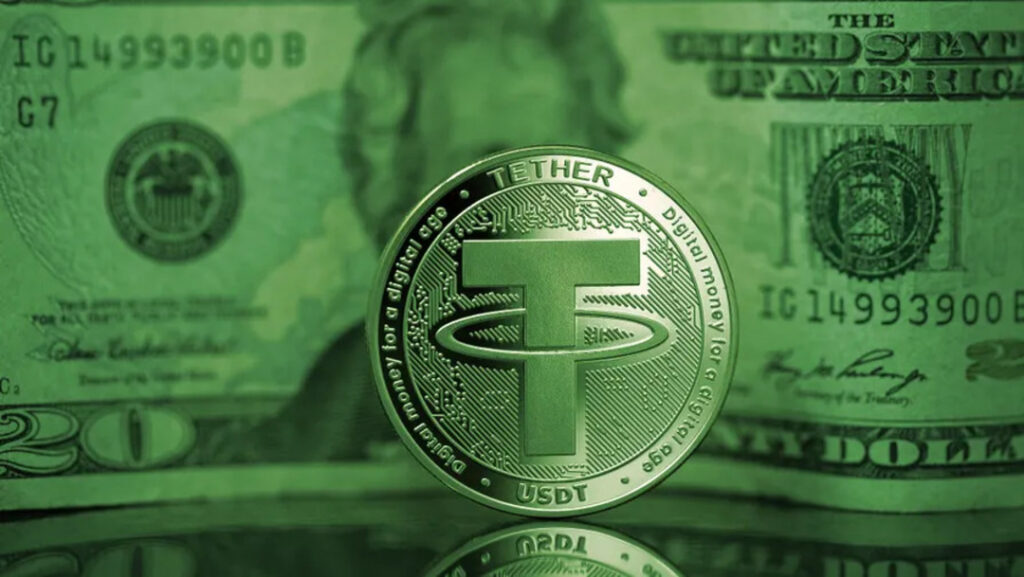
The Tether aUSDT shutdown is a reminder that crypto products do not survive on clever structure alone. Tether’s decision to wind down Alloy by Tether and aUSD₮ shows that even a major stablecoin issuer still has to answer the same basic market question: do users actually want the product enough to keep it alive?
This matters because stablecoins are no longer a niche crypto tool. They now sit inside trading, payments, offshore sportsbooks, cross-border transfers, and the wider debate over digital dollars.
Tether announced the planned wind-down of Alloy after reviewing user activity, market demand, and broader product priorities. Alloy was designed to support digital assets backed by Tether Gold tokens, including aUSD₮, an overcollateralized digital asset backed by XAU₮.
Tether Winds Down aUSD₮ After Demand Falls Short
aUSD₮ was not a simple copy of USDT. It tried to combine a dollar-like digital asset with gold-backed collateral, creating a more complex product for users who wanted exposure to tokenized real-world assets without holding a normal dollar stablecoin.
That idea was interesting. The market response appears to have been less convincing.
Tether said it will remove the ability to open new positions or mint new aUSD₮ during the wind-down. Existing users will still be able to return aUSD₮ and remove XAU₮ for a limited transition period, with the process set to end on September 17, 2026.
The lesson is direct: design does not guarantee demand.
Why Stablecoin Users Still Prefer Liquidity
The most successful stablecoins usually win because they are easy to understand, widely supported, and liquid enough for users to move in and out without second-guessing the exit path.
That is why USDT and USDC remain more practical for many crypto users than experimental structures. The average user does not want to solve collateral design before moving money. They want to know whether a platform accepts the coin, how fast it moves, what network is required, and whether redemption or conversion will be simple.
For bettors, that logic is even sharper. A sportsbook cashier is not the place where users want complexity. Someone comparing Bitcoin versus USDT is usually trying to answer a practical question: which rail reduces friction without creating a new mistake?
Gold-Backed Stablecoins Sound Simple Until Users Need an Exit
Gold-backed products can sound stable because gold has a long history as a store of value. But once that idea becomes a crypto product, the user still has to understand collateral, redemption, platform support, liquidity, and timing.
That is where complexity enters. aUSD₮ may have been built around a logical structure, but logical structure is not the same as everyday utility.
| User Concern | Why It Matters |
|---|---|
| Liquidity | Users need to enter and exit without friction |
| Simplicity | A stablecoin must be easy to understand |
| Platform support | Coins need real acceptance, not just design |
| Redemption | Users must know how to unwind positions |
| Network risk | Wrong-chain mistakes can create losses |
This is the same reason crypto payment pressure keeps growing in sports betting. Faster payments help, but users still need cleaner rules around supported coins, wallet compatibility, and withdrawal handling.
What This Means for Crypto Bettors
Stablecoins matter to bettors because they can reduce bankroll volatility compared with Bitcoin. But not every stablecoin is equally useful for betting.
The most practical sportsbook coins are usually the ones that combine stability, wide support, and simple cashier instructions. If a coin is hard to understand or rarely accepted, it may be a poor fit even if the structure sounds innovative.
That is why sportsbook reviews still matter. A user reading a BetOnline review is not only checking markets and bonuses. They are also checking whether deposits, withdrawals, support, and crypto handling are reliable enough for real bankroll movement.
The same applies when comparing a Bovada review or a BookMaker review. Bettors should care less about which crypto term sounds advanced and more about which payment path is actually supported, clear, and repeatable.
The best stablecoin is not always the most creative one. It is often the one users can trust under pressure.
Stablecoin Innovation Now Needs Proof
The Tether aUSDT shutdown does not mean stablecoin innovation is finished. It means new stablecoin designs need to prove they solve a real user problem better than existing products.
For crypto bettors, the practical takeaway is to separate payment tools from investment ideas. A coin can be technically interesting and still be a weak sportsbook payment choice. A product can be backed by a serious issuer and still fail to gather enough demand.
Anyone using crypto for betting should start with the basics: supported assets, exact network, fees, confirmation times, withdrawal limits, and wallet security. BMR’s crypto banking guide and beginner guide on how to buy Bitcoin safely both point toward the same principle: fewer moving parts usually means fewer ways to make a costly mistake.
The next stablecoin test will not be branding. It will be whether users can move money easily, understand the rules, and exit without confusion.
The Tether aUSDT shutdown matters because it shows that crypto users may welcome innovation, but they still reward liquidity, simplicity, and trust first. For bettors and stablecoin users, utility beats complexity every time the cashier is real.
Tether Winds Down FAQ's
Why is Tether winding down aUSD₮?
Tether said the decision followed a review of user activity, market demand, and broader priorities. The company is shifting focus toward products with stronger demand, deeper liquidity, and larger long-term opportunity.
Does this affect regular USDT?
No. The wind-down concerns Alloy by Tether and aUSD₮, not standard USDT. Regular USDT remains a separate product and is still widely used across crypto markets and many betting payment setups.
What should crypto bettors learn from this?
Crypto bettors should prioritize coins with clear sportsbook support, strong liquidity, simple instructions, and reliable withdrawal paths. A complicated stablecoin design is not automatically better for moving bankroll safely.