
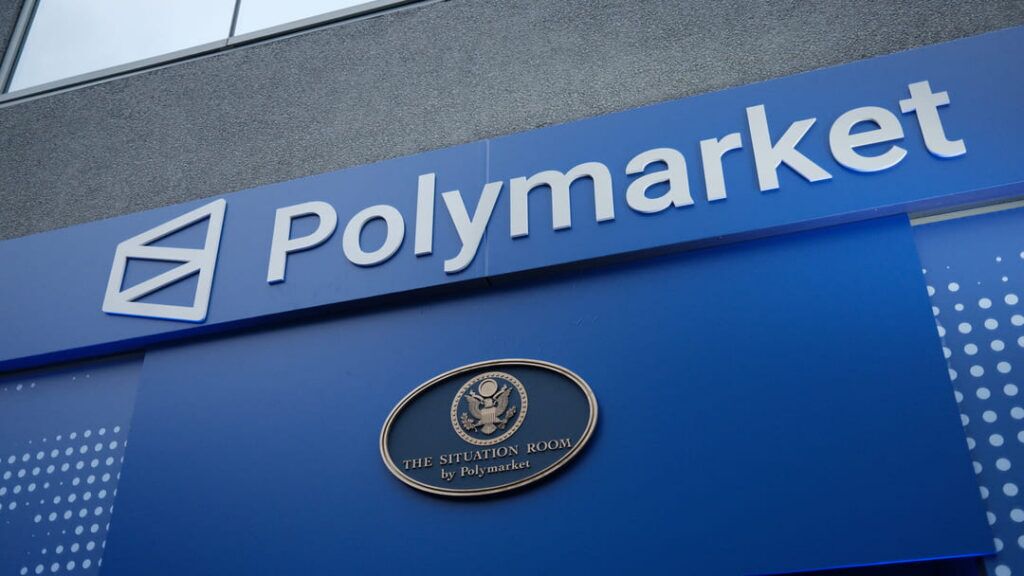
Polymarket insider trading is no longer a theoretical risk for crypto bettors, prediction-market users, or platforms trying to live between finance and wagering. The charge against a Google engineer accused of using confidential company information to profit from Polymarket bets turns a niche market-integrity debate into a warning: prediction markets may look new, but enforcement risk is old.
For anyone comparing prediction platforms with the best bitcoin offshore sportsbook, the lesson is immediate. If money is being placed on outcomes, regulators will care less about the platform’s branding and more about whether users are playing on a fair field.
Polymarket Insider Trading Changes the Risk Conversation
The case centers on Michele Spagnuolo, a Google software engineer charged in the U.S. after prosecutors alleged he used confidential business information to make profitable bets on Polymarket. The alleged profits were more than $1.2 million, tied to markets involving Google search-interest information before that information became public.
That matters because prediction markets have often been marketed as smarter, faster, more information-rich versions of public sentiment. Users can turn their view of politics, entertainment, business, crypto, and real-world events into a market position.
But this case exposes the uncomfortable side of that model. If one participant has access to nonpublic information, the market stops feeling like a collective forecast and starts looking like an unfair wagering environment.
That is the point betting readers should understand. The product may be wrapped in financial language, but the user experience can still resemble betting when people risk money on outcomes they cannot control.
Prediction Markets Now Look More Like Betting Products
Prediction markets are not traditional sportsbooks, but they often attract the same user: someone who wants odds, movement, volatility, and a chance to profit from being early or right.
The insider trading allegation sharpens that comparison. Sportsbooks have long dealt with inside information, suspicious betting patterns, and market manipulation. If a player knows an injury before the public, a line can move. If a trader knows confidential corporate data before a market settles, the same fairness problem appears under a different label.
That is why crypto-betting operators should pay attention. The next regulatory wave may focus less on what a platform calls itself and more on what it allows users to do.
The questions are simple but serious:
- Are users staking money on uncertain outcomes?
- Can insiders exploit private information?
- Does the platform have controls to protect market integrity?
If the answer creates doubt, regulators have a reason to step in.
Crypto Betting Regulation Is Becoming a Market Integrity Issue
The strongest angle here is not just scandal. It is the expansion of crypto betting regulation into market-integrity enforcement.
Crypto gambling debates often focus on payments, licensing, age checks, wallet screening, and responsible play. Prediction markets add another layer: whether the market itself is fair. That is a different kind of risk, and it may be harder for platforms to dismiss.
A crypto sportsbook can tighten withdrawal checks. A prediction market must also monitor who knows what, when they knew it, and whether the market was exposed before other users had a fair chance.
That is why this case connects naturally to pressure building around prediction platforms, especially after crypto betting regulation enters a new phase in markets where gambling-style enforcement is harder to avoid.
The issue is no longer whether prediction markets are innovative. The sharper question is whether innovation can survive without credible market safeguards.
The Compliance Bar Just Got Higher
Polymarket’s challenge is not only reputational. Any platform built around real-world outcomes now has to prove it can detect abuse before enforcement bodies make the platform part of the story.
That does not mean prediction markets are doomed. It means the next winners will likely be the platforms that look less like crypto’s wild frontier and more like serious financial infrastructure.
Better controls may include stronger identity rules, restricted employee participation, market surveillance, clearer listing standards, and faster responses to suspicious trades. Some users will see that as friction. Mature operators will see it as the cost of staying alive.
The Justice Department’s market integrity warning makes the enforcement logic plain: confidential business information cannot become a private betting edge simply because the venue is newer than a stock exchange or sportsbook.
For crypto bettors, the point is practical. A platform that feels fast and open may carry hidden risk if it cannot protect users from insiders, manipulation, or unfair information advantages.
What Crypto Bettors Should Watch Next
The next phase will be shaped by how platforms respond, how prosecutors frame future allegations, and whether regulators treat prediction-market abuse as gambling, finance, or both.
The clearest signal will be platform behavior. Watch whether prediction markets tighten rules around employees, insiders, sensitive corporate events, political information, and markets that depend on private data.
That line matters because trust is the product. Bettors do not only need fast payouts and attractive markets. They need confidence that the other side of the trade is not armed with information they could never access.
Polymarket insider trading is a turning point because it shows what happens when crypto-style access meets old-fashioned information abuse. The future of crypto betting regulation will not be built only around payments or licenses. It will be built around fairness, transparency, and whether platforms can prove that open markets are not just open to insiders first.


