
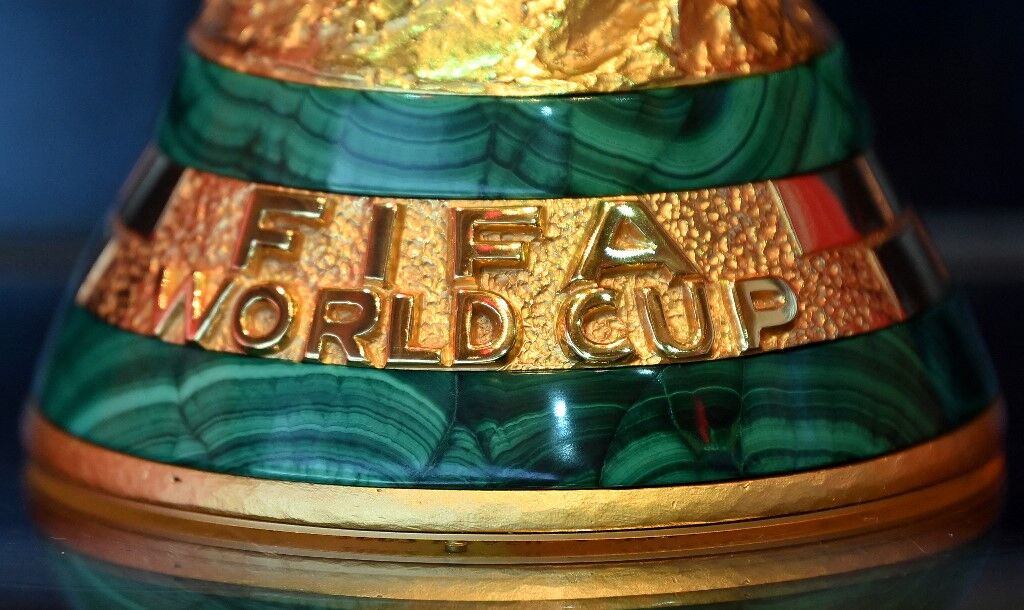
The biggest sporting event on the planet just landed in our backyard, and the regulated U.S. sportsbooks are already showing their hand. Tighter lines. Thinner prop menus. The same recycled signup bonus dressed in a World Cup jersey. Meanwhile, the top tier, most trusted offshore sportsbooks are rolling out the red carpet with odds, futures, bonuses, promotions, and prop markets that would make your state-regulated app weep into its geo-fence.
Here is the uncomfortable truth that the domestic operators would rather you not think about: for a 64-game global tournament spread across the United States, Mexico, and Canada, the best offshore betting apps in 2026 are offering a flatly superior betting product. More markets. Sharper prices. Fewer restrictions on how much you can win or how fast you can get paid.
Affiliate Disclosure: Editorial ratings and opinions are our own and are never influenced by advertising relationships. We only recommend books we have personally reviewed and rated. If you click a link and sign up, we may earn a commission at no extra cost to you.
Top 10 Reasons to Bet the 2026 World Cup Offshore
This is not a call to throw caution out the window. Far from it. If you are serious about betmaxxing this tournament (squeezing every possible cent of value out of every single match), you owe it to your bankroll to at least understand what is on the table. And if you have only ever bet through a domestic app, there is a whole ecosystem of World Cup betting sites you have never touched.
So that is what we built here. Ten concrete reasons some bettors are looking offshore to bet on the 2026 World Cup. No hype. No sales pitch. Just the math, the markets, and the honest trade-offs, reviewed by a team that has been rating sportsbooks since before your state legislature knew what a parlay was.
Let’s get into it.
Reason 10: The Odds Are Objectively Better
This is not an opinion. Pull up any World Cup group-stage match on a major domestic app, then open the same fixture at a top-rated offshore betting site. Compare the moneylines. Compare the totals. Do it five times.
You will notice a pattern. The offshore number is almost always a few cents friendlier. A domestic book might post the USA at -145 to beat a mid-tier group opponent. The offshore World Cup betting line? -135. Maybe -130. That does not sound like much until you realize the World Cup has 64 matches, and you plan to bet a good chunk of them.
That gap is where profitmaxxing lives. The idea is simple, borrowed from the same “maxxing” culture that turned self-improvement into an internet religion. Profitmaxxing in sports betting means obsessing over small, repeatable edges until they compound into something real. A dime here. A nickel there. Across an entire tournament, the difference between betting -145 and -130 on the same outcome is not trivial. It is the difference between a break-even month and an actual profit.
A Quick Profitmaxxing Case Study: Group-Stage Parlays
Say you build a three-leg parlay across three group-stage matches. At domestic odds, your implied payout might land around +550. The same three legs at offshore prices could pay +610 or better, depending on the sportsbook. On a $100 stake, that is $60 more in your pocket on a winner. Now multiply that across the entire group stage.
Nobody gets rich on one bet. But bettors who consistently grab the best available number, match after match, week after week? That is how a bankroll grows.
Reason 9: World Cup Prop Markets That Actually Go Deep
Open your domestic sportsbook app during a World Cup match. You will find moneylines, totals, and maybe a goalscorer market if you are lucky. Now open a top offshore book built for international soccer.
Cards. Corners. Player shots on target. Exact score. Half-time/full-time combos. Team to score first. Margin of victory by exact goal count. Tournament-long player props: golden boot, golden glove, most assists, and group finishing order for all eight groups.
The gap is not subtle. It is a canyon.
International online sportsbooks built their soccer betting products for a global audience that has wagered on the sport for decades. The infrastructure already exists. The market depth already exists. Domestic U.S. apps bolted their soccer offerings onto an architecture designed for NFL spreads and NBA totals. It shows.
For the bettor who actually watches the matches (who notices that a specific center-back picks up yellow cards against physical strikers, or that a goalkeeper punches more corners than he catches), these prop markets are where the real 2026 World Cup odds become exploitable. The more angles a book offers, the more chances you have to find a soft number. And offshore books offer significantly more angles.
Reason 8: Asian Handicaps and International Line Formats
If you have only bet on soccer through a U.S. app, you have probably only seen standard soccer bet types and odds such as moneylines and three-way markets (win, lose, draw). That is fine for a casual punt. But the rest of the world bets on soccer Asian handicaps, and there is a good reason.
Asian handicaps eliminate the draw. Instead of three possible outcomes, you get two. Your team either covers the handicap spread, or it does not. Some lines split your stake across two handicaps, offering built-in insurance if the match lands on a key number. It is a cleaner, sharper way to bet on soccer, and it is the standard format at every major international sportsbook.
Most domestic U.S. books either do not offer Asian handicaps at all or bury them three menus deep behind the moneyline and the over/under. Offshore books? They lead with them. They build their soccer odds engine around them.
For anyone trying to betmaxx a 64-game tournament, access to Asian handicap lines is not a luxury. It is a tactical necessity. The format gives you more precise ways to back a favorite, more efficient ways to take a dog, and better risk management on matches where one side clearly outclasses the other. If your current book does not offer them, you are betting with one hand tied behind your back.
Reason 7: No State-by-State Patchwork Nonsense
The 2026 World Cup will be played across three countries. Sixteen host cities. Matches in New York, Los Angeles, Dallas, Miami, Seattle, and a dozen other locations. The tournament is truly national, and it asks a simple question of the U.S. sports betting market: Can you keep up?
The answer, for a lot of states, is no.
Legal sports betting still does not exist in every U.S. state. Some states allow it online. Some restrict it to in-person only. Some ban certain bet types. A handful have no legal framework at all. If you travel to a match in a state where your app does not work, your geo-fence kills your account access at the worst possible moment.
Offshore books do not care where you are sitting when you place your bet. One account. Every match. Every market. No geo-fence panic ten minutes before kickoff because you crossed a state line. For a bettor following a full World Cup slate across multiple time zones and venues, that consistency matters more than most people realize until they lose it.
Reason 6: Crypto Deposits and Withdrawals That Actually Work
Ask any regular domestic sportsbook user about withdrawals and watch their face tighten. Three to seven business days. A verification request for the third time this year. A hold on a payout that cleared every compliance check but still sits in processing limbo.
Now talk to someone who uses Bitcoin, Ethereum, or USDT at a crypto-friendly offshore sportsbook. Deposits hit in minutes. Withdrawals, often same-day. Some books process crypto cashouts in under an hour.
This is not just about speed. Crypto sports betting solves a handful of practical headaches at once. No bank reversals. No credit card declines. No paper trail that triggers a fraud alert because your bank does not understand what a sportsbook deposit looks like. For the bettor managing a serious stack during a month-long tournament, the ability to move funds in and out quickly is not a perk. It is infrastructure.
A word of caution: not every offshore book handles crypto equally. Some charge hidden conversion fees. Some require minimum withdrawal amounts that eat into small balances. Check the terms. Read the BookmakersReview.com rating. The tool exists for exactly this purpose.
Reason 5: Reduced Juice Where It Counts
Standard vig at most domestic sportsbooks is -110 on each side of a line. That is a 20-cent spread between the two sides of a bet. You are paying 10% juice on every single wager. Over a long tournament, that tax bleeds your bankroll dry slowly enough that you might not even notice until the knockout rounds.
Several top-rated offshore betting sites offer reduced juice on soccer. Lines at -105 or even -102 on each side. The difference sounds academic until you do the math.
What Reduced Juice Actually Means for Your World Cup Bankroll
Imagine you place 40 bets over the course of the World Cup at $100 per wager. At -110, you need to win 52.4% of your bets just to break even. At -105, that number drops to 51.2%. At -102, it drops again to 50.5%.
That is not a rounding error. That is a structural advantage built into every bet you place for the entire tournament. A bettor winning 54% of their wagers at -110 juice turns a modest profit. That same bettor at -105 juice turns a meaningfully larger one. And at -102? The numbers get genuinely interesting.
This is the mathematical heart of profitmaxxing. You are not betting differently. You are not picking better sides. You are simply paying less to place the same wager. The edge compounds silently, bet after bet, match after match, all the way through the final.
Reason 4: Live Betting Built for the Beautiful Game
Soccer is a continuous sport. No quarters. No TV timeouts. No two-minute warnings. The ball moves, the odds shift, and the entire complexion of a match can change on a single counter-attack. That makes soccer one of the best live-betting sports on the planet.
Offshore books figured this out years ago. The major international books built their in-play betting engines for soccer from the start: granular odds updates, deep live prop menus, next-goal markets, and Asian handicap adjustments that shift in real time as the game develops. These platforms were stress-tested on Champions League nights and Premier League weekends long before Americans started caring about in-play soccer wagers.
Domestic U.S. books? Many of them grafted their soccer live-betting interface onto an engine designed for the NFL and the NBA. The result is often sluggish, thin on options, and two steps behind the actual match. If you have ever tried to grab a live number during a World Cup group-stage match on a domestic app and watched the odds freeze, lag, or vanish entirely, you already know the frustration.
For a tournament with matches kicking off in the morning, afternoon, and evening across multiple time zones, a live-betting platform that actually works is not optional.
Reason 3: Bonuses Designed for the Tournament, Not Just Acquisition
Every domestic sportsbook in America will run a World Cup deposit or betting promotion. Count on it. And most of those promos will follow the same tired formula: a sign-up bonus with a 10x or 15x playthrough requirement, restricted to new accounts only, expiring before the knockout stage even begins.
Offshore books tend to play a different game with their sportsbook World Cup promos. Reload bonuses for existing customers. Tournament-specific free bet packages that stretch across the group stage and into the bracket. Reduced juice windows timed to marquee matches. Accumulator insurance that refunds a leg if one team lets you down.
The distinction matters. A sign-up bonus only works once. A reload bonus works every time you top off your stack. A promotional structure designed around a month-long tournament respects the bettor’s actual timeline, not just the marketing department’s acquisition target.
Check the fine print. Always check the fine print. But if you compare the best World Cup futures bets and bonuses at top offshore books against what the domestic apps are offering, the gap in generosity and flexibility is real. BookmakersReview.com rates these promos for exactly this reason: the headline number means nothing if the terms make it impossible to actually cash out
Reason 2: They Actually Welcome Winning Bettors
Here is the dirty secret of the regulated U.S. sportsbook market: win too much, and they will cut you off. Limit your stakes. Restrict your access to certain markets. Sometimes, close your account entirely.
This is not conspiracy talk. It is well-documented. Domestic books use algorithms to identify sharp action, and when they spot a bettor who consistently beats closing lines, the response is swift and impersonal. Your $500 max bet on NFL sides becomes a $25 limit on World Cup group matches. Congratulations on being good at this. Now get lost.
Offshore betting apps, particularly the ones BookmakersReview.com rates highest, have a longer track record of tolerating sharp bettors. Some actively court them. This is partly structural (offshore books often balance their exposure through a global player pool rather than limiting individuals) and partly cultural (the international sports betting market has always treated winning bettors as a feature, not a threat).
You cannot betmaxx a single thing if your book slashes your limits two weeks into the tournament. That is the reality. The best betting strategy in the world is meaningless if the sportsbook will not let you execute it.
What “Sharp-Friendly” Actually Looks Like
A sharp-friendly sportsbook does a few things differently. It does not cut your limits after a winning streak. It does not restrict your access to prop markets once you show you know what you are doing. It does not slow-roll your withdrawals when you are up.
Ask yourself three questions about your current book: Have my limits ever been reduced? Have I been locked out of certain bet types? Has a withdrawal ever taken longer after a big win? If the answer to any of those is yes, you already know what a non-sharp-friendly book looks like.
Reason 1: Line Shopping Across Books Without Leaving Your Chair
This is it. The single most powerful weapon a bettor can carry into the 2026 World Cup. Forget everything else on this list for a second. If you take one thing away from this article, take this.
Line shopping is the act of holding accounts at multiple sportsbooks and comparing odds on the same match before placing your bet. It sounds simple because it is simple. And it is the single behavior that separates recreational bettors from serious ones.
Here is how it works in practice. USA vs. England in the group stage. Book A has the USA at +180. Book B has them at +190. Book C posts +195. You bet Book C. That is it. That is the whole move. You just earned an extra 15 cents of value on the same wager, with no additional risk and no additional analysis.
Now do that 50 or 60 times across the tournament. The compounding effect is the real profitmaxxing engine. Every match. Every market. Grab the best available number. Over 64 games, the cumulative edge can be the difference between a losing World Cup and a profitable one.
International sportsbooks make this easier because signing up at multiple books does not require separate state approvals, separate verification processes, or separate geo-fenced apps. One identity. Multiple accounts. The best number wins every time.
This is where to bet the World Cup if you are treating it like a serious, monthlong campaign and not a single impulse wager.
The World Cup Betmaxxing Bottom Line
Sixty-four games in 31 days. Three countries. Forty-eight teams. The largest World Cup in history is about to kick off on home soil, and the sheer volume of betting opportunities is staggering.
The offshore books are not perfect. Nothing is. Some have clunky interfaces. Some take longer than they should on customer service tickets. A few have earned their bad reputations, and BookmakersReview.com has rated them accordingly. Your job as a bettor is not to trust blindly. Your job is to compare, verify, and choose with your eyes open.
But the core value proposition is real. Better odds. Deeper markets. Reduced juice. Crypto payouts. Fewer restrictions on winning. Access to Asian handicaps and live-betting platforms that were built for soccer from the ground up. For a tournament of this scale, those advantages add up fast.
The edge is not in gambling anymore. Read that again. The edge is in choosing better markets, better prices, and better terms. That is what separates profitmaxxing from recklessness. That is what this list is about.
BookmakersReview.com exists to give you the full picture. Read the ratings. Compare the terms. Make the call that fits your bankroll and your risk tolerance. The World Cup only comes around every four years. Bet it as it matters.
Responsible Gaming: The Only Bet That Always Matters
Betting on the World Cup should be fun. It should make the matches more engaging, the stakes more personal, the goals louder. The second it stops being fun, the second it starts causing anxiety or financial stress, it has become something else entirely.
Setting Limits Before the First Whistle
Do this before the tournament starts. Not during.
- Set a tournament bankroll. Decide the total amount you are willing to risk across the entire World Cup. Write it down. That is your ceiling.
- Define your unit size. Most sharp bettors recommend 1% to 3% of your total bankroll per wager. Stick to it.
- Use deposit limits. Every reputable sportsbook, offshore or domestic, offers deposit cap tools. Use them. Remove the temptation before it arrives.
- Set session timers. Especially during a tournament with multiple matches per day. Walk away between games. Watch a match without money on it. Remember what that feels like.
Know the Signs
If you are betting more than you planned. If you are chasing a loss with a bigger bet. If you are lying to someone about how much you wagered. If the thought of not betting on a match makes you anxious. These are not quirks. These are warning signs, and they deserve your attention.
Help is available. The National Council on Problem Gambling can be reached at 1-800-522-4700 or online at ncpgambling.org. The call is confidential, free, and available 24/7. Many sportsbooks also offer self-exclusion tools directly through your account settings.
Being a sharp bettor means knowing when not to bet. Full stop.
Frequently Asked Questions
Is it legal to bet on the World Cup at an offshore sportsbook from the United States?
U.S. federal law does not explicitly prohibit individual bettors from placing wagers internationally, but the legal picture varies by state. Some states have laws that address online gambling broadly. Others do not. BookmakersReview.com does not provide legal advice. If you are uncertain about the laws in your state, consult a qualified attorney before opening an offshore account.
What is the safest way to deposit at an international sportsbook?
Cryptocurrency (Bitcoin, Ethereum, USDT) is the most popular deposit method at offshore books because it is fast, does not require sharing banking details, and processes with minimal fees. If you prefer traditional methods, some offshore books accept credit cards, person-to-person transfers, or money orders. Always verify the deposit terms and any associated fees before funding your account.
Can offshore sportsbooks limit or ban winning bettors like domestic books do?
Some can, and some do, but the practice is far less common at reputable offshore books than at domestic U.S. sportsbooks. The top-rated online sportsbooks reviewed by BookmakersReview.com are evaluated partly on their treatment of sharp bettors. Check the individual reviews for details on each book’s track record with winning players.
What does "reduced juice" mean, and why does it matter for World Cup betting?
Juice (or vig) is the commission a sportsbook charges on every bet. Standard juice is -110 on each side. Reduced juice means the sportsbook charges less, often -105 or -102. Over a 64-game tournament with dozens of bets, reduced juice can save you hundreds of dollars and meaningfully improve your break-even win rate.
How do I know if an offshore sportsbook is trustworthy?
Look for a long operating history, a valid gaming license, transparent bonus terms, responsive customer support, and a clean record with player complaints. BookmakersReview.com has rated offshore sportsbooks on these criteria for more than 20 years. Start with the books that carry our highest ratings and read the full reviews before signing up.
*The line and/or odds on picks in this article might have moved since the content was commissioned. For updated line movements, visit BMR’s free betting odds product.


