

Table of Contents

Daily Fantasy Sports in California (2026): What’s Legal, What’s Not, and What Californians Can Do

DFS California

Daily fantasy sports (DFS) is often lumped in with “sports betting,” but it’s not the same experience. DFS usually means building a lineup (salary-cap or draft style), earning points from real athletes, and competing against other players in contests.

In California, the big question is legality — and the answer is more complicated than most headlines make it sound.

This page explains the current DFS situation in California, what types of fantasy play are typically the lowest-risk, and what to consider before putting real money into any fantasy contest.

California DFS status at a glance

  • Paid DFS contests: legally disputed and high-risk in California (see the California DOJ / Attorney General DFS opinion
  • Season-long fantasy leagues with friends/coworkers: generally treated as a lower-risk “social” format when done the right way (no “house,” no rake)
  • Free-to-play fantasy contests: typically the simplest, lowest-risk option
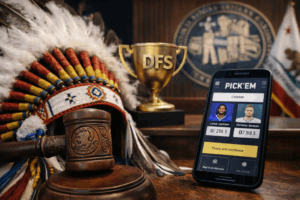
  • “Pick’em” style fantasy games: often the most legally sensitive because they can resemble player-prop wagering

Important: This guide is informational and not legal advice. Laws and enforcement can change. If you’re unsure, read the primary sources linked below and consider speaking with a qualified attorney.

Is daily fantasy sports legal in California?

In July 2025, the California Department of Justice released a formal legal opinion addressing daily fantasy sports. The opinion describes DFS as operating under existing California gambling laws — and it raises serious legal risk for paid DFS contests involving California players.

Two practical takeaways for readers:

“Not clearly regulated” does not mean “safe.”

If you’re trying to minimize risk, focus on lower-stakes social leagues, free-to-play formats, or contests that do not resemble sports wagering.

What “counts” as DFS (and why the format matters)

Not all “fantasy” games look the same, and the format matters because some styles look more like sports wagering than others.

Here are the main buckets Californians run into:

Salary-cap DFS (classic DFS)

You draft a roster under a salary cap, points accrue based on athlete performance, and you compete in head-to-heads or tournaments.

Draft-style DFS

You draft players (snake draft) against other users, then compete based on point totals.

Pick’em / player-stat fantasy

You choose higher/lower style outcomes for individual player stats (yards, points, rebounds, etc.). This is the category that can look the most like player prop betting.

Season-long fantasy (traditional leagues)

Friends run a league for an entire season. This is the most “normal” fantasy experience and is often the least controversial when it’s truly social.

Bottom line: the closer a product feels to wagering on the result of player performances, the more legal sensitivity it tends to attract.

The lowest-risk ways to enjoy fantasy sports in California

If your goal is “play fantasy sports without flirting with legal trouble,” these options are the safest starting point:

Season-long leagues (friends, family, coworkers)

If you run a normal league with a commissioner and a simple prize for the season, keep it clean:

  • No one takes a cut (no rake / no “house”)
  • Everyone pays the same entry
  • Payouts are transparent
  • It’s a private group (not a public contest board)

Free-to-play fantasy contests

Many major sports sites and apps offer free contests with bragging-rights prizes, merch, or small promotions. If you just want the competition, this is the simplest lane.

Best ball / drafts for entertainment

Some platforms offer drafts that are free or structured for entertainment rather than cash prizes. If real money is involved, treat it as higher-risk and read the platform’s rules carefully

If you’re considering real-money DFS anyway: a risk checklist

Some Californians will still look at paid DFS contests. If that’s you, take a “risk-managed” approach:

  1. Read the primary legal source first (don’t rely on TikTok summaries) 
  2. Confirm whether the operator explicitly allows California customers right now (availability changes)
  3. Avoid anything that looks like player prop wagering dressed up as “fantasy”
  4. Don’t use a VPN or workarounds to bypass location rules (that can create account and payout problems)
  5. Start small and treat your first “win” as a withdrawal test (payout reliability matters more than bonuses)
  6. Keep records for taxes if you’re playing real-money contests (wins and losses)

And most importantly:

If a platform’s rules are unclear, or if the product feels like sports betting, assume the risk is higher.

Are there “California DFS apps”?

You’ll see DFS apps marketed nationally — but what matters is whether they currently accept California customers and what product type they’re offering.

Because California does not have a clear, state-regulated DFS framework like some states do, availability can change, product lines can change, and “DFS” can mean very different things across platforms (classic DFS vs pick’em).

If you want the cleanest user experience with the least controversy:

  • prioritize season-long play, private leagues, or free-to-play contests
  • be extra cautious with pick’em style products

How DFS differs from sports betting (and why people confuse them)

DFS and sports betting can both involve sports outcomes, but they’re different:

DFS: you’re competing against other players’ lineups using a scoring system

Sports betting: you’re wagering against a book on a price (spread, moneyline, totals, props)

In practice, some modern fantasy products blur the line — especially pick’em formats — which is a big reason the legal conversation gets heated in California.

Responsible gaming

Even when fantasy is “skill-based,” it can still become a problem if the stakes creep up.

If you or someone you know needs help, the National Problem Gambling Helpline is available 24/7:

Call: 1-800-522-4700

Chat/text options may be available through the helpline network. See our Responsible Gambling guide.


If you landed here looking for the broader California sports betting picture (not DFS), go back to the main California hub and use the “Fantasy / DFS” section from there. 

Keep Reading: Top Ranked California Sportsbooks & Betting Apps

FAQs: Daily Fantasy Sports in California

California’s DFS status is disputed and legally sensitive. A formal California DOJ / Attorney General opinion released in July 2025 discusses DFS under existing state gambling laws. Read the primary source before playing paid contests. 

Season-long leagues among friends are generally viewed as lower-risk when they’re truly “social” (no rake, no one taking a cut, clear rules). Keep it private and transparent.

Pick’em formats are often the most sensitive because they can resemble player prop wagering. If you’re trying to reduce risk, avoid formats that look like “higher/lower on player stats.”

Can I play DFS while traveling?

Location rules typically depend on where you are physically located at the time of play. Don’t use workarounds (like VPNs) — they can lead to account restrictions and payout issues.

No. This is informational content only. For legal advice, consult a qualified attorney.

About the Author
Martin Green Headshot
Editor-in-Chief
Martin Green is the Editor-in-Chief of Bookmakers Review and one of the most widely published iGaming and sports betting analysts in the industry. With more than 15 years of professional experience, Martin specializes in sportsbook reviews, state-by-state betting coverage, soccer handicapping, and online casino analysis.

Before entering journalism, Martin worked for five years at William Hill in London, gaining first-hand industry knowledge that now informs his betting insights and safety evaluations.

His reporting and analysis have been featured in major outlets including:
  • The Independent
  • USA Today
  • The Sun
  • Legal Sports Report
  • PlayUSA
  • SportsLine (CBS) — where he appears as "The Guru"
Education & Credentials:
  • BA in English Literature
  • MA in Creative Writing
  • Postgraduate journalism qualifications
Martin is known for producing data-driven betting recommendations, compliance-focused evaluations, and accurate legislative updates, all independently fact-checked for BMR’s readers. His work emphasizes safety, regulatory clarity, and transparent sportsbook assessments.