
The legal battle that has been raging between federally licensed prediction markets and state gaming regulators may be headed to the United States Supreme Court for a final determination as to whose authority will ultimately be recognized. Until the highest court settles this jurisdictional dispute, many bettors are choosing to bypass the uncertainty altogether by placing their wagers at trusted offshore sportsbooks.
Jurisdictional Debate
The legal squabble began shortly before the 2025 Super Bowl when prediction market Kalshi expanded its footprint from offering commodity contracts on gold, silver, pork bellies, and everything in between to sports event contracts featuring Super Bowl LIX between the Philadelphia Eagles and the Kansas City Chiefs.
Kalshi, like other prediction markets, is licensed by the Commodity Futures Trading Commission (CFTC), which allows those licensees free rein to operate unfettered in all 50 states due to the agency’s federal authority, which supplants state authority.
However, state gaming commissions took exception to the prediction markets muscling in on the sports betting industry, which has spawned a new revenue stream for states. Prediction markets do not pay license fees or taxes to the states and have initiated a legal battle against every cease-and-desist letter they have received.
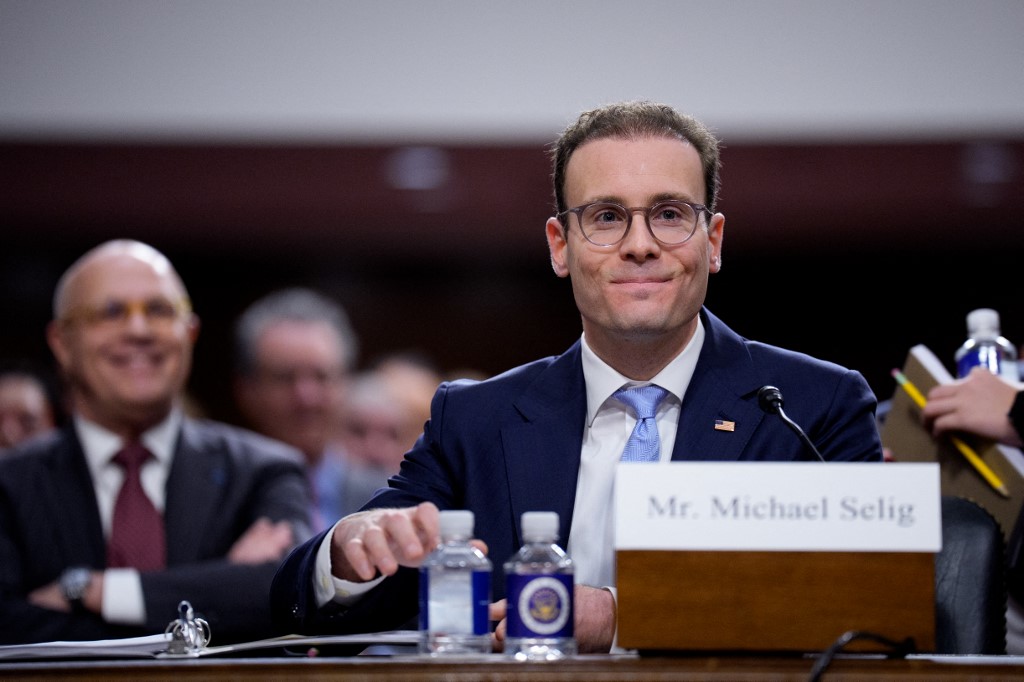
The CFTC, under the new chairmanship of Michael Selig, has recently waded into the controversy, announcing they would be joining Kalshi’s legal battle against the state governments that have brought suit against it.
The rulings have been a hodgepodge of state and federal court rulings that often conflict with one another, creating confusion for prediction markets and complicating their legal standing in the ongoing disputes. Nevada has made the most headway in putting a halt to the prediction markets offering sports event contracts, but that could just be a temporary victory.
Will the Supremes Be Summoned?
Only the most vexing legal matters ascend to the level of the US Supreme Court, but when district, state, and appellate courts begin reaching conflicting decisions, called “circuit splits,” it often draws the interest of the highest court in the land.
The Supreme Court runs from October through June; therefore, the most expedient timeline would involve the SCOTUS agreeing to hear the case before they adjourn this summer, with arguments taking place in late 2026 or early 2027.
Lawmakers are also becoming proactive in support of their state gaming agencies and attorneys general. Ohio state Senator Bill DeMora recently sponsored Senate Bill 430, a measure that would mandate prediction markets to pay an initial licensing fee of $500,000 (plus $150,000 annually thereafter) and 20% of their revenue to the state, the same as Ohio’s mobile sports betting platforms.
However, even if those bills become state laws, it is highly unlikely the states will be able to enforce them until a Supreme Court ruling decides whether the CFTC’s federal jurisdiction or the gaming commissions’ state authority is paramount.
“Honestly, if a state-level law like that passes, I think there’s a good chance that it doesn’t even take effect because it will be waited on until this goes to the U.S. Supreme Court,” said industry analyst Ryan Butler to News 5 Cleveland. “Every indication and everything…talking to lawyers and all of that is that this is ultimately where this is going to have to be determined: whether or not these are financial trading platforms or if these are really just sportsbooks under a different name.”
Butler added, “Either way, the Supreme Court ruling is going to be the biggest thing in gambling in a decade; it’s amazing either way. Up and until then, this is going to be the biggest story going on in gaming.”