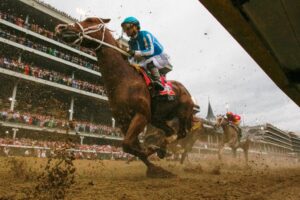
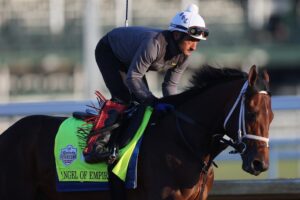
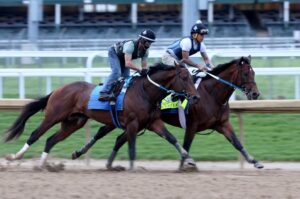
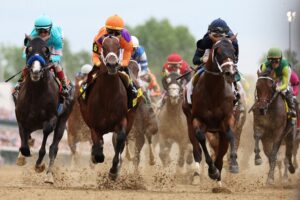
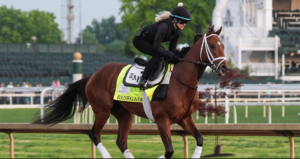
The 152nd Kentucky Derby runs at Churchill Downs in Louisville, Kentucky. Post time lands around 6:57 PM ET on Saturday, May 2, 2026. Distance: 1 and 1/4 miles on dirt. The field caps at twenty three-year-old thoroughbreds, the biggest starting gate in major North American racing.
Track conditions matter. A lot. Early May weather in Louisville can throw anything at the field, from firm and dry to sloppy and sealed. Radar becomes your best friend in the final 48 hours before post.
The Road to the Kentucky Derby
Qualifying for the Derby flows through a points system run by Churchill Downs. Points get awarded to top finishers across a prep race circuit from September through April. The top twenty horses by points earn a gate spot. Runners 21 and beyond sit on the also-eligible list, hoping for a scratch.
Key Derby prep races to track:
- The Florida Derby at Gulfstream Park
- The Santa Anita Derby in Southern California
- The Blue Grass Stakes at Keeneland
- The Wood Memorial at Aqueduct
- The Arkansas Derby at Oaklawn Park
- The Louisiana Derby at Fair Grounds
- The UAE Derby in Dubai
A horse that wins or places in two of these earns a legitimate shot at racing history. A horse that flops in its final prep? Red flag. Worth noting before you bet a dime.
The 2026 Derby carries a $5 million purse, with roughly $3.1 million going to the winner. It opens the Triple Crown, followed by the Preakness and Belmont Stakes.
Top Contenders and Current 2026 Odds
Prerace favorite and Arkansas Derby winner Renegade will break from the No. 1 post position after the official draw was held on Saturday, April 25. Commandment, fresh off a Florida Derby victory, and The Puma are also top contenders.
This year’s Run for the Roses figures to be a wide open one, with nine different entrants sporting odds of 15-1 or better. Here’s a closer look at the horses (and their odds) that will make up the 2026 Kentucky Derby.
Here’s where each horse will start on Saturday, along with the horse’s trainer, jockey and odds
- Renegade, Todd Pletcher, Irad Ortiz Jr., 4-1
- Albus, Riley Mott, Manny Franco, 30-1
- Intrepido, Jeff Mullins, Hector Berrios, 50-1
- Litmus Test, Bob Baffert, Martin Garcia, 30-1
- Right to Party, Kenny McPeek, Chris Elliott, 30-1
- Commandment, Brad Cox, Luis Saez, 6-1
- Danon Bourbon, Manabu Ikezoe, Atsuya Nishimura, 20-1
- So Happy, Mark Glatt, Mike Smith, 15-1
- The Puma, Gustavo Delgado, Javier Castellano, 10-1
- Wonder Dean, Daisuke Takayanagi, Ryusei Sakai, 30-1
- Incredibolt, Riley Mott, Jaime Torres, 20-1
- Chief Wallabee, Bill Mott, Junior Alvarado, 8-1
- Silent Tactic, Mark Casse, Cristian Torres, 20-1
- Potente, Bob Baffert, Juan Hernandez, 20-1
- Emerging Market, Chad Brown, Flavien Prat, 15-1
- Pavlovian, Doug O’Neill, Edwin Maldonado, 30-1
- Six Speed, Bhupat Seemar, Brian Hernandez Jr., 50-1
- Further Ado, Brad Cox, John Velazquez, 6-1
- Golden Tempo, Cherie DeVaux, Jose Ortiz, 30-1
- Fulleffort, Brad Cox, Tyler Gaffalione, 20-1
Scouting the Favorites
Early 2026 futures favor a small group of high-profile colts from elite barns with deep Derby résumés. Sharp bettors look past the morning line and study:
- Final prep performance: A dominant win beats a grinding victory at a slow pace.
- Beyer Speed Figures: A triple-digit final prep Beyer signals a horse peaking at the right time. Anything under 95 raises questions.
- Pedigree for 10 furlongs: Some sires throw colts who shorten up at the classic distance. Check the dam side too.
- Trainer pattern: A handful of conditioners own this race. Others get paid to run fourth.
Sleepers and Bombers
History rewards bettors who stretch past the chalk. Since 2000, favorites have won the Derby only a handful of times. Longshots hit the board year after year. Mine That Bird paid $103.20. Rich Strike paid $163.60.
Where do big-priced winners hide? Three patterns repeat:
- A late-developing colt peaking into May
- A proven closer drawing a field loaded with speed
- A European or international shipper shrugged off by the American public
Smart handicappers wrap their tickets around one or two live longshots. You don’t need the 15-1 winner every year. One bomb in the right spot can pay for your entire weekend.
How to Bet on the Kentucky Derby Online
Derby betting splits into two main worlds: parimutuel pools and fixed-odds sportsbooks. Know the difference. It protects your stack.
Parimutuel Pools
Parimutuel is the traditional track model. Every wager of a certain type goes into a common pool. The track takes its cut (called the takeout), then the rest gets split among winning tickets based on how much action each horse drew. Your payout depends on the crowd.
Translation? You don’t know your exact price until the pool closes. A 6-1 morning line runner can pay 3-1 if the public hammers him, or 12-1 if everyone fades him.
Fixed-Odds Offshore Sportsbooks
Offshore sportsbooks play a different game. You lock in the posted price the moment you place the bet. Done. Bet a horse at 20-1 three weeks before the race and he wins? Your ticket pays 20-1. Doesn’t matter where he closes.
This is where offshore books crush everything else for Derby futures. Most domestic U.S. racebooks post Derby futures a few days before post at best. Offshore operators list them months ahead at inflated prices, long before the public catches on.
Practical Betting Basics
Before you place a single ticket, lock three things down:
- Your bankroll: Pick a number you can afford to lose. That’s your Derby stack. Stick to it.
- Your bet types: Straight wagers for first-timers. Exotics for players hunting bigger scores.
- Your book: Fund an account 48 hours before post time. Crypto deposits clear in minutes. Bank transfers lag.
New Kentucky Derby bettors blow up their bankroll in the same predictable ways. They bet every race on the card. They chase losses after the fifth race flop. They toss in a last-minute “hot tip.” Skip all three. Plan your ticket. Place it. Watch the race. Cash (or don’t) with your head held high.
Straight Wagers: Win, Place, and Show
Start here if you’re new to horse betting. Straight wagers run exactly like they sound.
- Win: Your horse must finish first. That’s the whole ballgame.
- Place: Your horse must finish first or second.
- Show: Your horse must finish first, second, or third.
A $2 win ticket on a 10-1 horse pays $22 plus your $2 back. A $2 place wager on the same horse might return $8 if he runs second. A show bet pays less but cashes more often.
Real example: Bet $10 to win on a 12-1 shot. He wires the field. Your ticket pays roughly $130. Same horse, $10 to show? Closer to $30 or $40, but you collect on first, second, or third.
These are the ABCs of horse racing. Master them before you touch exotics.
Exotic Wagers: Exactas, Trifectas, and Superfectas
Exotic wagers pay the five-figure tickets. They also torch more bankrolls than any other bet on Derby Day. Play them with a plan.
- Exacta: Pick the first two finishers in exact order. A $1 exacta on a 20-1 winner paired with an 8-1 runner-up can clear three figures.
- Trifecta: Pick the first three finishers in exact order. Derby trifectas routinely pay four digits on a $1 wager.
- Superfecta: Pick the first four finishers in exact order. Churchill Downs allows a 10-cent minimum. Derby supers have paid out five and six-figure tickets more than once.
Boxing vs. Keying
Two main ways to structure exotic tickets:
- Box: Pick a group of horses. They can finish in any order. A $1 exacta box of four horses costs $12 and covers every possible top-two combo.
- Key: Pick one horse to finish on top (or second, or third) and spread your other picks around him. Keying lets you lean hard on a strong opinion without paying for combos you don’t believe in.
Pro tip: Boxes blow up fast in a twenty-horse field. A ten-horse superfecta box runs you $504 at ten cents per combo. Keying beats boxing almost every time for the Derby.
Real ticket: Key a 15-1 longshot on top. Under him, use the top four favorites for second, third, and fourth. Your 10-cent superfecta costs $2.40 total. If your bomb wins and three chalks fill in behind him, that ticket can pay thousands.
 Date: Saturday, May 2, 2026
 Post Time: ~6:57 p.m. ET (subject to broadcast schedule)
 TV Coverage: NBC, USA Network, NBC Sports
 Live Streaming: Peacock, YouTube TV, fuboTV, NBC Sports App
 Current Favorite: Renegade (+500 at BetOnline as of latest odds)
 Location: Churchill Downs, Louisville, Kentucky
 Track Type: Left-Handed Dirt
 Distance: 1 1/4 Miles (10 furlongs)