
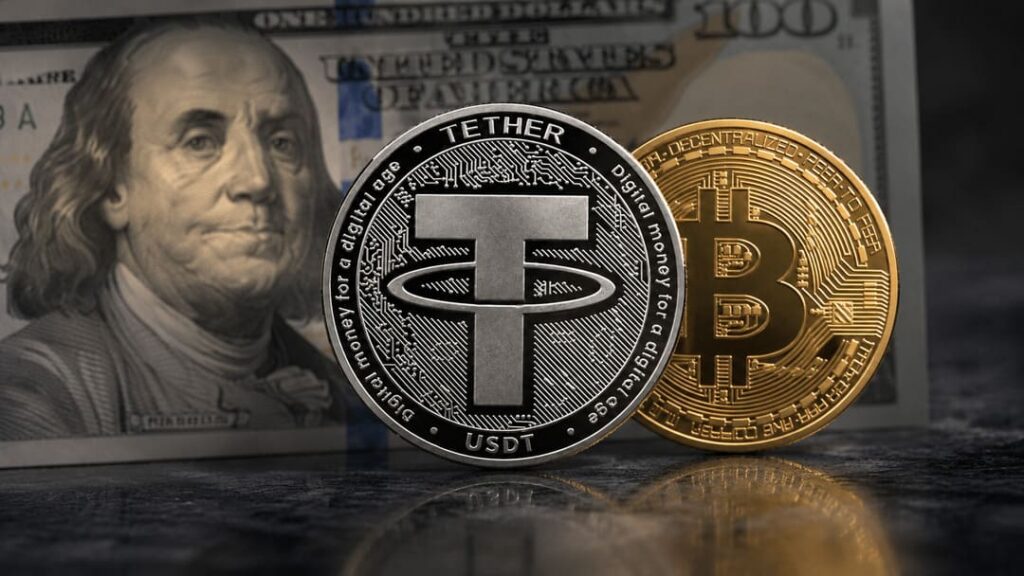
USDT dominance is flashing a warning that Bitcoin traders should not ignore. When money moves toward dollar-pegged tokens instead of riskier crypto assets, the market is not just pausing; it may be protecting itself from deeper volatility.
For crypto bettors, stablecoins are starting to look less like a niche payment option and more like a warning signal. At top-rated crypto sportsbooks, they offer the speed and flexibility bettors want without the headache of watching a Bitcoin bankroll rise or fall before a wager even settles. But that convenience comes with a bigger implication: when users choose stability over upside, it may say as much about fading confidence in volatile crypto as it does about smarter betting habits.
USDT Dominance Is Becoming Crypto’s Fear Gauge
USDT dominance measures Tether’s share of the total crypto market. When that share rises, it often means traders are holding more value in a dollar-linked token rather than deploying capital into Bitcoin, Ethereum, altcoins, or higher-risk crypto trades.
That does not automatically mean Bitcoin is doomed. Stablecoins are also used for transfers, exchange settlement, DeFi activity, and fast liquidity management. But when USDT dominance rises while Bitcoin is under pressure, the message becomes harder to dismiss.
The current concern is the appearance of a bullish “golden cross” on the USDT dominance chart. In technical terms, that kind of crossover suggests momentum may be shifting in favor of the asset or metric being tracked. In plain English, the market may be choosing caution over conviction.
For crypto traders, that matters because stablecoin demand can cut both ways. It can mean money is waiting on the sidelines for a better Bitcoin entry. It can also mean traders are reducing exposure, preserving dollars, and preparing to exit entirely.
Why the Golden Cross Is Bad Timing for Bitcoin
Bitcoin already had a fragile setup before the latest USDT dominance signal. A rising stablecoin share becomes more meaningful when it appears alongside weaker risk appetite, pressured spot prices, and traders questioning whether recent rebounds have real staying power.
The problem is not simply that USDT is gaining share. The problem is what that gain represents. A trader who rotates from Bitcoin into USDT is not taking on more risk. They are reducing it.
That is why this signal feels different from a normal market rotation. In bull markets, stablecoins often serve as dry powder. Traders sell one asset, hold USDT briefly, then buy the next dip. In weaker markets, stablecoins become a parking lot. Money waits longer, moves less aggressively, and sometimes leaves crypto altogether.
Bitcoin needs active demand to recover convincingly. If traders are increasingly choosing stablecoins, Bitcoin’s bounce attempts may become easier to fade. The market can still rally, but it needs fresh buying pressure strong enough to overcome defensive positioning.
The Sportsbook Angle Makes Stablecoins Harder to Ignore
For betting audiences, the rise of stablecoins is not an abstract chart signal. It affects how users think about deposits, withdrawals, bankrolls, and payment timing.
Bitcoin remains the best-known crypto payment rail, but volatility makes it awkward for some bettors. A deposit can change in value before it reaches a sportsbook balance. A withdrawal can look different by the time it lands in a wallet. That is why comparisons such as Bitcoin versus USDT matter for users who care less about speculation and more about preserving dollar value.
Stablecoins solve one problem while introducing others. They can make bankroll accounting cleaner, especially for players who do not want their betting funds tied to Bitcoin’s price movement. But USDT also requires users to understand networks, wallet addresses, exchange support, and transfer rules.
That is where crypto betting becomes part of the wider market story. The more users treat USDT as the practical payment layer, the more stablecoins become a behavioral default. A trader may see USDT as a safe harbor. A bettor may see it as a cleaner cashier tool. In both cases, the result is the same: more activity moves through dollar-pegged crypto rails.
Bitcoin’s Problem Is Liquidity, Not Just Price
Bitcoin price weakness gets the headlines, but liquidity behavior tells the deeper story. If traders are moving toward stablecoins, the question becomes whether that capital is preparing to re-enter Bitcoin or quietly stepping away.
That distinction is critical. A healthy correction often includes stablecoin accumulation before the next leg higher. A more dangerous market phase includes stablecoin dominance rising because risk assets are losing trust.
| Market Signal | What It May Suggest | Why It Matters |
|---|---|---|
| Rising USDT dominance | More capital sitting in stablecoins | Traders may be reducing risk exposure |
| Falling Bitcoin momentum | Weak demand for risk assets | Rebounds may struggle to hold |
| Stablecoin use in betting | Demand for dollar-like crypto payments | Users may value stability over upside |
| Higher crypto payment adoption | More wallets and sportsbook rails | Stablecoins become harder to regulate and ignore |
| Renewed Bitcoin buying | Risk appetite returning | USDT dominance could start to reverse |
For sportsbooks and payment processors, the shift is practical. Stablecoin rails can support faster-feeling payments and less price confusion, which helps explain why crypto payment rails have become more important to the betting experience.
For traders, the same movement can be defensive. A market that keeps choosing stablecoins over Bitcoin is not showing strong speculative appetite. It is showing hesitation.
The Risks Are Bigger Than One Chart Pattern
The golden cross is useful, but it should not be treated as a magic signal. Crypto markets can reverse quickly, especially when positioning becomes crowded. A sudden Bitcoin rally could pull capital out of USDT and back into risk assets.
Still, the warning deserves attention because it fits a wider pattern. Stablecoins are no longer just a convenience layer. They are part of crypto’s market structure, payment infrastructure, and risk-management system.
That creates a more complicated environment for bettors and traders. Anyone using a crypto banking guide should understand that payment speed is only one part of the decision. Stability, network compatibility, withdrawal rules, and operator support all matter.
The same applies to traders moving between spot crypto, stablecoins, and leveraged products. As crypto perpetual futures become more visible, the temptation to treat every market move like a quick bet may grow. That is exactly when stablecoin signals become useful. They show whether the crowd is embracing risk or stepping away from it.
The Next Shift Will Show Whether Bitcoin Still Has Buyers
The key signal now is whether USDT dominance keeps rising or begins to reverse. If it rises further, Bitcoin may face a tougher recovery path because more capital is choosing stability. If it rolls over, that could suggest traders are moving back into risk assets.
Bettors should also watch whether stablecoins keep gaining mindshare as payment tools. BMR has already tracked how dollar stablecoin dominance affects crypto betting risk, and the latest market signal makes that issue more urgent.
Bitcoin does not need stablecoins to disappear. It needs traders to stop hiding in them. USDT dominance matters because it shows where confidence is flowing right now, and at the moment, the market’s comfort zone appears closer to the digital dollar than to Bitcoin risk.
USDT FAQs
What does USDT dominance mean?
USDT dominance measures Tether’s share of the total crypto market. When it rises, more market value is sitting in USDT relative to other crypto assets, which can signal caution.
Why can rising USDT dominance hurt Bitcoin?
Rising USDT dominance can suggest traders are moving away from volatile assets and into dollar-pegged stablecoins. That may reduce buying pressure for Bitcoin and make rebounds harder to sustain.
Is USDT better than Bitcoin for sports betting?
USDT can help bettors avoid Bitcoin price swings, but it requires careful network selection. Bitcoin is often simpler and more widely recognized, while USDT may suit users focused on stable value.